Hey everyone, it’s Jake from the Aluminum Hydraulic Cylinder team here. Today, I’m breaking down how we test leakage rates on our cylinders—because if you’ve ever dealt with a hydraulic system that’s losing pressure (or worse, leaking all over the shop floor), you know how big of a pain that is. As a supplier, our entire reputation rides on delivering cylinders that don’t let you down, so leakage rate testing isn’t just a “check-box” for us—it’s the most important step before any cylinder leaves our facility. Let’s dive into how we do it, why it works, and what you should actually care about when you’re vetting your cylinder supplier. Aluminum Hydraulic Cylinder

First, let’s get one thing straight: leakage isn’t just oil on the floor. For aluminum cylinders specifically, they’re used in everything from construction cranes to factory automation lines, where even a tiny leak can kill productivity, waste fluid, or create a safety hazard. The International Organization for Standardization (ISO) actually has a standard (ISO 10101) that covers hydraulic cylinder testing, but we tweak it a lot for aluminum because that metal is a bit more prone to micro-porosity if we don’t machine it right—so our testing has to be extra precise. No cutting corners here, trust me.
Let’s start with what leakage rate even means, quick—because I’ve had customers ask me this a hundred times. It’s the volume of fluid (usually hydraulic oil, but sometimes water-based fluid for specific applications) that escapes past the piston seal, rod seal, or out through any cast-in ports, in a set amount of time, at a set pressure. For our aluminum cylinders, we don’t just test at random pressures; we test at the maximum operating pressure (MOP) the cylinder is rated for, plus 10% over that for a safety buffer. That tells us if it’s going to hold up when you’re really pushing the system.
Now, let’s walk through our actual testing process step by step—this is how we do it in our shop, not some textbook lab experiment. First, we prep the cylinder. We take every new aluminum cylinder off the machining line and double-check all the connections first. No loose ports, no cross-threaded rod ends—those are obvious leaks, but we don’t want to miss them before we even apply pressure. We also make sure all seals are installed correctly; even a tiny misaligned seal can cause way more leakage than a factory defect. We wipe down the entire cylinder and the test stand so we can spot any drips immediately—no messy surprises here.
Next, we mount the cylinder to our test rig. This isn’t some janky setup we threw together, either. Our test stand is purpose-built for aluminum cylinders because their lightweight design means they can flex a little under pressure, which might skew results if the mount isn’t rigid. We connect the supply lines to our test fluid (we use the same ISO 46 hydraulic oil that most of our customers use, so results are spot-on) and attach a precision flow meter—this is key. We don’t eyeball drips; that’s inaccurate and slow. The flow meter measures how much oil is going in, and then we measure how much is coming out (or if any is bypassing the piston) in real time. We also use a pressure transducer that reads to 0.1 PSI, so we can make sure we’re holding a steady pressure during the test—fluctuations in pressure will mess up leakage rate numbers, so we keep it locked in for the entire duration.
Wait, there are two main types of leakage we test for, right? Internal and external. Let’s break those down because they’re totally different. External leakage is what you see—oil on the rod, around the ports, drips on the floor. That’s bad because it’s wasted fluid, messy, and a slip hazard. Internal leakage is the oil that slips past the piston seal from the cap end of the cylinder to the rod end (or vice versa) without going through the rod. That’s sneaky because you won’t see it, but it means your cylinder is losing pressure, so it’ll slow down or not hold position when you need it to. For example, if you’re using a cylinder to hold a pallet 10 feet up in the air, internal leakage could let it creep down slowly over time—total disaster.
So here’s how we test both. For external leakage: we charge the cylinder to 110% of its MOP (like I said earlier) and hold that pressure for 10 full minutes. That’s our standard test time, and it’s enough to catch even tiny seal issues. We watch every single seal—rod seal, piston seals, port plugs, welds, the aluminum body itself. Aluminum is strong, but if there’s a micro-porosity defect from casting, that can leak too, so we check the whole body, not just the moving parts. After 10 minutes, if we see more than 0.5 mL of leakage total, that cylinder gets flagged. For most industrial applications, that’s the threshold we set because any more than that is unnecessary waste.
For internal leakage, this is where the flow meter really earns its keep. We block the rod end of the cylinder, so no oil can flow out there, then charge the cap end to MOP and hold steady. We measure how much oil is “leaking” past the piston into the rod end (which is blocked, so it’s only internal leakage) over the same 10-minute window. Our limit here is even tighter—0.3 mL per minute at rated pressure. Because internal leakage is invisible, you don’t want that slipping past your load. We’ve had customers come to us after buying cheap cylinders that had 2 mL of internal leakage, and they had to rebuild their whole hydraulic system because it kept stalling. That’s why we don’t cut corners on this test.
Wait, do we ever do higher pressure tests? Yeah, sometimes for specialty cylinders, like ones used in oil and gas or heavy construction, where they might see pressure spikes. For those, we do a short-duration test at 150% of MOP for 1 minute, just to make sure the seals and body don’t blow out or leak under extreme pressure. But our standard test is the 10-minute hold at 110% MOP, because that’s what the cylinder will see in real-world use 99% of the time.
Also, one thing we’ve learned working with aluminum specifically: temperature matters a lot. Aluminum conducts heat way faster than steel, right? So if the cylinder gets hot during testing (which it will, from friction between seals and the rod), the fluid viscosity changes, and that can throw off leakage numbers. So we control the test stand’s temperature to 20°C (68°F) during the test, which is the standard working temperature for most hydraulic systems. If we test at 40°C, we’d get a lower leakage rate than the real thing because hot oil is thinner, but that’s not useful data. We test at room temp to get a baseline that translates to actual on-the-job performance.
Now, let’s talk about what happens if a cylinder fails the test. We don’t just scrap it—we figure out why. Last month, we had a batch of 12 aluminum cylinders that all had slightly higher external leakage around the rod seal. Turns out, the seal supplier sent us a batch that had a tiny mold defect, so the seal lip wasn’t seated right. We swapped them out, re-tested, and they passed, and we let our customer know what happened. That’s the kind of transparency we pride ourselves on—we don’t hide failures. Every cylinder that leaves our facility has a test sheet attached, so if you ever have an issue, you can pull that up and see exactly what our readings were when it left.
I get it—testing takes time, and some suppliers might try to skip it to save money. But when you’re relying on a hydraulic cylinder, you can’t afford that. A $500 aluminum cylinder that leaks is way worse than a $1,000 cylinder that’s tested and guaranteed not to leak. We’ve spent thousands on our test stands and quality control team, but that’s an investment, not a cost—because our customers come back, and they tell other people about us.
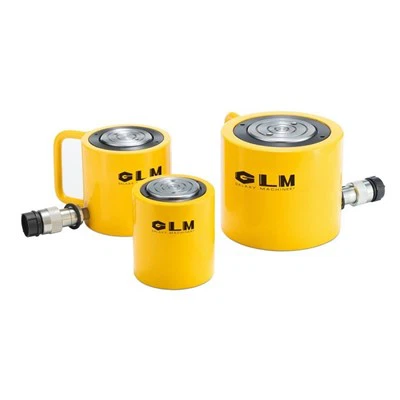
Let’s recap the key takeaways here, so you don’t have to remember all the jargon. First, leakage rate testing isn’t just checking for oil on the floor—you have to test both external and internal leakage. Second, for aluminum cylinders specifically, test at 110% of their rated operating pressure, for 10 minutes, at a consistent room temperature. Third, use a precision flow meter, not visual checks, to measure leakage accurately. Fourth, always ask your supplier for a test certificate—any legit hydraulic cylinder vendor will have that, and if they don’t, run the other way.
At the end of the day, we’re in this to make cylinders that work when you need them. If you’re in the market for aluminum hydraulic cylinders and you want to talk about testing standards, custom specs, or just ask more about how we do our leakage tests, hit us up. We’re not here to push a sale—we’re here to help you get the right cylinder for your job, no hidden fees, no garbage parts.
Hydraulic Equipments References
ISO 10101: Hydraulic fluid power – Cylinders – General purpose cylinders
Hydraulic Cylinder Testing Procedures, National Fluid Power Association (NFPA)
Aluminum Hydraulic Cylinder Design and Quality Control, SAE International
Taizhou Galaxy Machinery Co., Ltd.
Taizhou Galaxy Machinery Co., Ltd. is one of the leading aluminum hydraulic cylinder manufacturers and suppliers in China. We warmly welcome you to wholesale cheap aluminum hydraulic cylinder for sale here from our factory. Good service and reasonable price are available.
Address: 18 Jiulong Road, Jiulong Town, Hailing District, Taizhou City, Jiangsu Province,China
E-mail: sales03@galaxy-machinery.com
WebSite: https://www.galaxy-machinery.com/
