When I first started working as a wall chargers supplier, one question popped up more than any other—often from customers who’d just unboxed a new phone and stared at the short cable tucked next to the charger brick: Do wall chargers come with long charging cables? It’s a simple question, but the answer isn’t as black and white as you might think, and over the years, I’ve learned that it’s tied to everything from manufacturing costs, user habits, regional regulations, and even the types of devices we’re powering. Let me break this down the way I explain it to every customer who stops by our showroom or shoots us an email asking for clarification. Wall Chargers
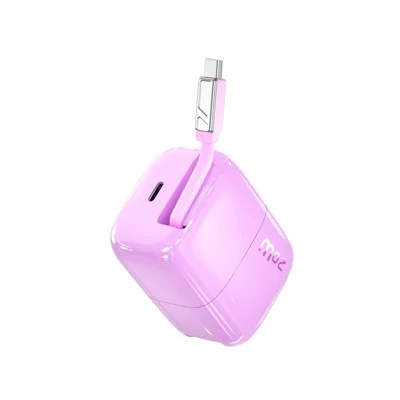
First, let’s get one thing straight: there’s no universal rule here. I’ve supplied wall chargers with cables that are 1 meter long and others that stretch to 2 meters, and I’ve seen both work beautifully and fall short for users. The trend that started a few years ago—smartphone makers ditching bundled chargers with new phones—has shifted expectations for everyone, including people who buy wall chargers separately. Back in the day, a new iPhone or Android would come with a charger, cable, and wall plug all in one box, usually with a cable that was around 1 meter long, just long enough to reach a nightstand or desk outlet. Now that many brands separate those components, users are asking why their new wall charger doesn’t have a longer cord to reach outlets across the room, or a socket behind a couch.
From a supplier’s perspective, cable length is one of the balancing acts we navigate with every product line. Let’s start with the basics of manufacturing. A 1-meter cable uses less copper, fewer plastic components, and is cheaper to produce than a 2-meter one. When we’re building a wall charger for budget shoppers, that cost savings matters—we can keep the final product price lower, which means it’s accessible to more people who just need a backup charger for their car or a guest room. But here’s the catch: that cost balance also ties into cable quality, not just length. A cheap 2-meter cable made with thin copper might slow charging speeds or even damage your device’s battery over time, whereas a thicker 1-meter cable can deliver power more efficiently. That’s a tradeoff I never want my customers to ignore. I’ve seen too many people buy a “long charging cable” off a big online retailer for $2, only to find their phone takes twice as long to charge, and the cable frays after a month of being wrapped around their desk.
Then there’s user behavior, which is where the line between “too short” and “just right” gets blurry. Let’s think about how most people use wall chargers. If you’re charging your phone at your bedside table, 1 meter is perfect—you can set your alarm, have your phone within arm’s reach, and still plug it into the outlet behind the headboard. If you’re charging a laptop on your kitchen counter, or a tablet on the living room floor, you need a longer cable. That’s why many of our mid-range wall chargers now come with a detachable cable that’s 1.5 meters long—long enough for most living room or desk setups, but not so long that it tangles around furniture or gets in the way when you’re moving the device. We also offer optional upgrades to 2-meter cables for customers who specifically need that length, like people who charge their devices in the garage or workshop, where outlets are often farther from where you work.
Regional differences also play a big role here, believe it or not. In some European countries, for example, wall outlets are installed lower on walls than in the United States, where outlets are often higher up near desks or nightstands. That means a 1-meter cable that works for a US customer’s nightstand might be too short for a European customer’s outlet, which is lower to the ground. We’ve adjusted our product lines over the years to account for that—offering slightly longer standard cables for our European market, while keeping the 1-meter option for North American shoppers who prefer it. It’s small details like that that make a big difference in how useful a wall charger is for someone, and as a supplier, we spend a lot of time gathering feedback from customers in different regions to get that right.
Another factor most people don’t think about is charging technology. Fast chargers, especially those that deliver higher wattage—like 25W, 45W, or even 65W for laptops and tablets—require cables that can handle more power without losing efficiency. A very long cable, say 3 meters, might cause voltage drop, which means the charger can’t deliver the full wattage your device needs to charge quickly. That’s why many fast wall chargers come with shorter, thicker cables built to handle high power levels. We’ve tested this with our own products: a 1-meter cable for a 65W charger will deliver full speed, but a 3-meter cable for that same charger will only work at half the wattage, because the extra length adds resistance. It’s a tradeoff between convenience (a longer cable) and performance (fast charging), and we always make sure to label our products clearly so customers know what they’re getting.
Wait, let’s talk about the elephant in the room: the recent decision by many tech companies to remove wall chargers from new device boxes. When that started happening a few years ago, a lot of customers panicked, thinking they’d have to buy a separate charger and cable, and that the cable they got might be too short. But what many people don’t realize is that those companies still set standard cable lengths for their bundled chargers, and when customers buy wall chargers separately, they can choose the cable length that fits their needs. As a supplier, we’ve seen a huge surge in demand for wall chargers with longer cables since that shift—more people are working from home and setting up multiple charging stations in their homes, requiring longer cords to reach outlets in different rooms. That’s why we expanded our line in 2022 to include a range of wall chargers, from compact 1-meter options for travel to heavy-duty 2-meter options for workshop and home office use.
I also want to mention something about durability, because that’s a big part of what makes a good wall charger, regardless of cable length. A longer cable is more likely to be pulled, stepped on, or tangled, so it needs to be made of materials that hold up. All of our cables are braided nylon, not cheap plastic, and we test them to withstand thousands of bends before they start to fray. We also make sure the connectors are reinforced at the stress point where the cable meets the plug, so you don’t have to worry about it breaking after a few months of use. That’s a point I always emphasize when customers ask about cable length—don’t just pick the longest cable you can find, pick one that’s built to last, because a long, flimsy cable is worse than a short, sturdy one.
Let me share a quick story that sums this up. A few months back, a regular customer came into our warehouse, frustrated. He’d bought a wall charger from another supplier that came with a 2-meter cable, but it was so thin and flimsy that it had already stopped working after three weeks. He needed a replacement, and he wanted to know what length he should get. We showed him our 1.5-meter braided cable, explained that it was thick enough to handle fast charging, and durable enough for his needs. He ended up buying three, and a month later, he sent us a message saying the cables were still working perfectly, and the length was exactly what he needed for his home office setup. That’s the kind of feedback that makes all the balancing acts worth it—knowing that we’re providing a product that solves a real problem for people, whether that problem is a cable that’s too short, too flimsy, or too slow.
Now, if you’re shopping for a wall charger and still trying to decide what cable length is right for you, here’s my advice: first, measure the distance between the outlet you’ll use most and where you’ll put your device. If it’s less than a meter, a standard 1-meter cable is perfect, and it’ll usually be cheaper and more efficient for fast charging. If it’s between 1 and 2 meters, go for a 1.5-meter cable—it’s the sweet spot for most people, long enough to reach across most desks or nightstands without being unnecessarily bulky. If you need more than 2 meters, look for a high-quality cable that’s designed to handle your charger’s wattage, because longer cables can slow down fast charging if they’re not built right.
And if you’re in the market for bulk wall chargers for your business, or you’re a retail owner looking to stock quality products, I’m here to help. Whether you need compact 1-meter chargers for travel kits, long 2-meter chargers for home use, or high-wattage options for laptops and tablets, we can work with you to find the right solution for your needs. We offer flexible pricing for bulk orders, and all of our products are tested for safety and performance, so you can trust that what you’re getting is reliable.
At the end of the day, the question of whether wall chargers come with long charging cables doesn’t have a one-size-fits-all answer. It depends on your needs, your setup, and what you value most—whether that’s price, charging speed, durability, or length. As a wall chargers supplier, my goal is to make sure every customer can find a charger that works for them, whether that’s a short, compact one for their travel bag or a long, sturdy one for their workshop. If you have more questions about our products, or you’re interested in discussing bulk orders, don’t hesitate to reach out.
Kids Camera References
- Consumer Technology Association. (2023). Charging Cable Durability and Usage Trends. Tech Buyer’s Guide Annual Report.
- International Electrotechnical Commission. (2022). Standard for Charging Cable Performance for Consumer Electronics. IEC 62700:2022.
- Pew Research Center. (2021). Remote Work and Home Office Device Usage. Digital Life Report.
- U.S. Department of Energy. (2022). Energy Efficiency of Charging Cables for Portable Electronics. Office of Energy Efficiency and Renewable Energy.
- European Commission. (2020). Regional Outlet Standards and Consumer Charging Habits. Digital Single Market Report.
Shenzhen Xierun Electronics Co., Ltd.
Shenzhen Xierun Electronics Co., Ltd. is one of the most professional wall chargers manufacturers and suppliers in China. With abundant experience, we warmly welcome you to wholesale the newest wall chargers made in China here from our factory. We also accept customized orders.
Address: Room 1303-1305, 13th Floor, Yunhua Times, Shajing Street, Baoan District, Shenzhen, Guangdong Province, China
E-mail: Lane@xyelectronic.com
WebSite: https://www.xierunelec.com/
