If you’re in the market for machining equipment, you’ve likely come across two terms that pop up repeatedly in conversations with shop managers, production engineers, and sales reps: single-spindle turn mill centers and multi-spindle turn mill centers. As someone who’s spent 12 years selling turn mill centers directly to job shops and high-volume production facilities, I can tell you the difference isn’t just a matter of how many spindles the machines have—it’s a decision that directly impacts your production speed, part complexity, labor costs, and long-term flexibility. I’ve seen shops waste six-figure investments on a machine that didn’t fit their workflow, and I’ve watched others double their output simply by swapping a single-spindle model for the right multi-spindle setup. Let’s break this down so you don’t make the same mistakes. Turn Mill Center
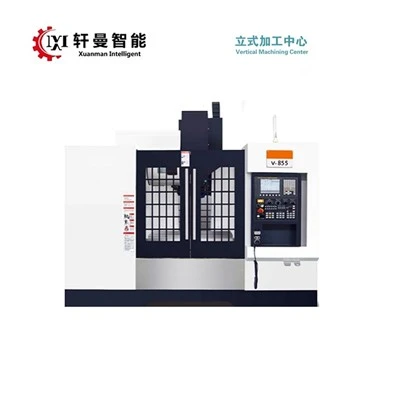
First, let’s start with the basics: what even is a turn mill center, anyway? For anyone new to the space, it’s a machining tool that combines two core operations—turning (rotating a part against a cutting tool to shape it) and milling (using a rotating cutting tool to drill, slot, or surface a part) —all in one machine. A traditional lathe only does turning, and a mill only does milling, so turn mill centers eliminate the need to move parts between multiple machines. That cuts down on setup time, reduces the risk of human error or part damage during transfers, and shrinks your overall production cycle. It’s why turn mill centers are the workhorses for everything from automotive engine components to aerospace fasteners to medical device parts.
Now, single-spindle vs. multi-spindle: the first obvious distinction is spindle count, but that’s where the similarities end. A single-spindle turn mill center has one main spindle that holds and rotates your workpiece during all machining operations. That spindle might be capable of both turning and milling tasks, so you can do things like turn a shaft, then drill a hole on the end, then mill a flat surface without moving the part. But there’s only one spindle here—so only one part can be worked on at a time.
A multi-spindle turn mill center, by contrast, has two or more independent main spindles, each holding a separate workpiece and able to perform its own machining tasks simultaneously. Some multi-spindle setups even have additional secondary spindles for support or backworking, but the core difference is that you’re running multiple parts at once instead of one.
Let’s dive into practical use cases, because specs don’t mean much until you see them in action. Last year, I worked with a small medical device job shop in Detroit that makes custom bone screws for orthopedic surgeries. They were running two single-spindle turn mill centers, each making 120 screws an hour total. They had enough work to keep both machines busy, but they were falling behind on a big order for a hospital network that needed 5,000 screws in six weeks. When I suggested a 4-spindle turn mill center, they were worried it would be too expensive and too big for their 2,000-square-foot shop floor. We ran a test on their existing screw program, and that 4-spindle machine cranked out 350 screws an hour—almost three times their current output—without taking up much more space than their two single-spindle units combined. That order was delivered on time, and they still use that multi-spindle machine for their high-volume regular orders now.
On the flip side, another client is a custom prototype shop in Boston that works with startups to develop new small engine parts. Their work is all one-offs or small runs of 10 to 50 parts, with each prototype needing unique features that change frequently. A multi-spindle machine would be overkill here. Setup for a multi-spindle machine takes longer: you have to load all the spindles, adjust each tool path to match the part on that spindle, and run test cuts for every position. For a small run, that setup time would eat up any speed advantage from running multiple parts at once. The single-spindle model they had works perfectly: they can load a new prototype, tweak the program in 15 minutes, and get a finished part in an hour. If they bought a multi-spindle machine, they’d spend more time setting it up than actually machining parts.
That brings us to the most important practical differences: cycle time, setup time, labor needs, and cost. Let’s start with cycle time. Single-spindle machines work on one part at a time, so total cycle time is equal to the time it takes to machine that one part from start to finish. Multi-spindle machines split the work across multiple spindles, but here’s the catch: your total cycle time is only as long as the slowest spindle. If one spindle takes 8 minutes to machine its part and the others take 5, the total cycle time is 8 minutes, not 18. That’s the biggest reason multi-spindle machines excel at high-volume runs—they turn multiple parts in the time it takes a single-spindle machine to turn one.
But that advantage fades when setup time is factored in. Single-spindle turn mill centers have much shorter setup times. You can load a part, adjust a few tools, and run a new program in a matter of hours, or even less if your team is experienced. Multi-spindle machines require you to set up each spindle, align tools for each work position, and coordinate the cycle for all spindles. For a short run, say 10 parts, that setup time could take 4 hours, while a single-spindle machine would have the part running in 30 minutes. By the time the multi-spindle machine is finished setting up, the single-spindle could have already made all 10 parts and moved on to the next job.
Labor is another factor that’s easy to overlook. Single-spindle machines are simpler to operate, so you don’t need a team of experienced machinists to run them. One operator can tend to two or three single-spindle machines at once, loading parts, checking finishes, and swapping out tools. Multi-spindle machines, especially high-speed models, require a more skilled operator—you need someone who knows how to adjust all the spindles, troubleshoot any tool issues across multiple positions, and keep the cycle aligned. In a tight labor market, that’s a big consideration: it’s often harder to find machinists qualified to run multi-spindle equipment, and their hourly rates are higher.
Costs vary too, but not just the purchase price. A multi-spindle turn mill center will almost always cost more upfront than a single-spindle model of the same general size and capabilities. But for high-volume runs, the per-part cost is much lower. Let’s do a quick example: a single-spindle machine costs $150,000, and a multi-spindle 4-spindle model costs $280,000. If you make 10,000 parts: the single-spindle takes 10 minutes per part, so total machining time is 1,667 hours, with labor costs (say $50 an hour) adding $83,350, plus tooling costs of $10,000, for a total per-part cost of $24.34. The multi-spindle takes 8 minutes per part (total cycle time) across 4 spindles, so total machining time is 333 hours, labor costs $16,650, tooling costs $15,000, and even adding the extra $130,000 in purchase price spread over 10,000 parts, the per-part cost is $21.65. Over 100,000 parts, that gap gets even bigger, while a 1,000-part run would have the multi-spindle’s per-part cost higher, because the purchase price is spread over fewer units.
You also can’t ignore flexibility, which is a huge one for many shops. Single-spindle turn mill centers are way more flexible when it comes to part complexity. Because they only have one spindle, you can accommodate parts that are odd-sized, have unique backworking operations, or require multiple setups that would be hard to coordinate across a multi-spindle machine. Multi-spindle machines are designed for parts that can be repeated easily—small, symmetrical parts like fasteners, connectors, or simple aerospace brackets. If you need to make a custom part with unique features every time, the single-spindle is the way to go.
I’ve also seen shops try to mix both, which is a common middle ground that works for a lot of facilities. Many mid-sized shops have one single-spindle machine for prototypes, small runs, and complex parts, and one or two multi-spindle machines for high-volume, repeat jobs. That way, you get the best of both worlds: the flexibility to handle custom work and the speed for production runs. It’s a setup I see more and more as shops balance fluctuating demand these days.
A common myth I hear all the time is that multi-spindle machines are only for large, factory-sized operations. That’s not true anymore. There are compact, 2-spindle or 3-spindle turn mill centers that fit on shop floors as small as 1,500 square feet, and they’re perfect for shops that have a mix of small runs and some moderate volume. I’ve sold 2-spindle machines to shops that thought they couldn’t afford or fit a multi-spindle setup, and they’ve been able to take on jobs they couldn’t before because of the extra speed.
The key takeaway here isn’t that one is better than the other—it’s that you have to match the machine to your production needs. If you’re making small, repeat parts in runs of 1,000 or more, and you have the floor space and skilled labor, a multi-spindle turn mill center will cut your costs and boost your output. If you’re doing prototypes, custom parts, or small runs of 50 or less, and you value flexibility and lower upfront setup time, a single-spindle machine is the smarter choice. And if you do both, having both machines on your floor is worth the investment.
At the end of the day, this decision doesn’t have to be overwhelming. I’ve helped hundreds of shops run numbers, test their programs on our equipment, and figure out which setup will work best for their specific jobs. We offer on-site demos, free cycle time testing, and support to help you make the right call, not just sell you a machine. If you’re tired of falling behind on orders or wasting time on machines that don’t fit your workflow, reach out to us to talk through your production needs. We can help you crunch the numbers, test your parts, and find a turn mill center that will make your shop more efficient and profitable.
Vertical CNC Lathe References:
- "Modern Turn-Mill Centers: Capabilities and Applications" – SME, 2021
- "High-Volume Machining: Comparing Single and Multi-Spindle Setups" – Manufacturing Engineering Journal, 2022
- "Shop Floor Flexibility in Machining Operations" – Journal of Manufacturing Systems, 2020
- "Cost Analysis of Turning vs. Multi-Spindle Machining for Custom Parts" – Tooling and Production Association, 2023
Jiangsu Xuanman Intelligent Equipment Co., Ltd.
As one of the most professional turn mill center manufacturers in China, we’re featured by quality products and low price. Please rest assured to buy discount turn mill center made in China here from our factory. Customized orders are welcome.
Address: No.1-1, Weier Road, Jieji Equipment Manufacturing Industrial Park, Sihong County, Suqian City, Jiangsu Province, China
E-mail: jsxmzn@163.com
WebSite: https://www.xm-machs.com/
