If you’re a small-space dweller, you know the pain of staring at a pile of mismatched storage boxes, half of them shoved under beds, the other teetering on a shelf that’s way too narrow for their size. When I first started running my household storage box business, I thought the best way to solve this problem was just to make boxes that “fit anywhere”—but after talking to dozens of apartment renters, studio apartment owners, and even small home homeowners, I realized storage is less about the box itself and more about how you place it. Over the years, I’ve tested every trick in the book (and even helped a few customers reorganize their entire living rooms) so let’s cut through the generic “stack high” advice and break down the science of storing household storage boxes in tight spaces. Household Storage Box
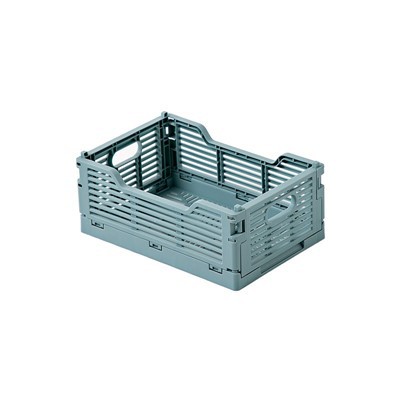
First, let’s start with the biggest mistake I see customers make: stacking boxes randomly against walls or in corners. A few months ago, a customer from Brooklyn reached out saying he had three large plastic boxes taking up half his studio’s entryway, and they made the space feel way smaller than it was. I told him to grab a tape measure and map his room’s “dead zones” first—those spaces that don’t hold furniture, don’t block walkways, and aren’t touched daily. For his studio, that was the 12-inch gap between his couch and the wall, which he’d never noticed before. That gap fit three of our slim, stackable fabric storage boxes perfectly, and because they were tucked away instead of out in the open, his entryway felt twice as spacious. This isn’t just a random hack; it’s based on spatial design: dead zones are underutilized because most people only plan for furniture, not for storage that blends in. For small spaces, never place boxes where they create a visual barrier—your eye should move freely around the room, not stop at a stack of boxes.
Next, the right way to stack boxes, because stacking is still one of the most space-efficient methods, but only if you do it correctly. I’ve seen customers pile heavy cardboard boxes on top of lightweight fabric ones, which not only damages the boxes over time but also wastes space because the bottom boxes get crushed. The rule here is weight distribution: always stack heavier boxes at the bottom, lighter ones on top. For example, if you’re storing off-season winter clothes (heavy) and summer accessories (light), put the winter box at the base, and the summer one on top. But here’s a pro tip I learned from a storage engineer friend: leave a 1-inch gap between each box and the ceiling or the shelf above if you’re using a cabinet. That small gap prevents moisture buildup, especially in closets with poor ventilation, and also makes it easier to pull out a box when you need it—no more wiggling a stack that’s too tight. If you’re stacking on the floor (not recommended, but sometimes necessary), make sure the stack is no taller than your waist. Anything higher is hard to reach safely, and you risk the whole stack tipping over. I’ll never forget the time a customer told me her stack of boxes fell on her when she tried to grab a holiday decor box from the top—turns out she’d stacked them 6 feet high, way past waist level. That’s a avoidable accident, and it’s why we now include a small label on each of our medium and large boxes reminding users not to stack more than 3 high.
Then there’s underutilized vertical space, which is a game-changer for small spaces. So many people ignore the walls above eye level, but that’s prime real estate for storage boxes. We make wall-mountable plastic storage boxes that are designed to be screwed into wall studs, not just drywall, which means you can hang them in the kitchen to hold baking supplies, or in the bedroom to hold extra linens. A customer from Chicago told me she hung six of our wall boxes in her hallway closet, and it freed up 2 square feet of floor space that she turned into a small desk. The key here is to measure the wall space before you buy—don’t just drill holes randomly. For drywall, use anchors, and for studs, use screws that are at least 1.5 inches long to keep the boxes secure. Also, group boxes by category so you don’t have to climb up and down every time you need something: hang all linen boxes together, all craft boxes together, all tool boxes together. That way, you can access a group of items without rearranging the entire wall.
Another trick is to use multi-functional furniture that works with storage boxes. This is something we’ve always focused on with our product design, because small spaces can’t afford to have furniture that only does one thing. For example, an ottoman that’s also a storage chest for extra blankets, or a bed frame with built-in drawers that fit our under-bed storage boxes. Under-bed storage is one of the most underrated solutions, especially for people with low-profile beds—if your bed is at least 6 inches off the floor, our low-profile plastic boxes slide right under without blocking any walkways. I once helped a customer in Manhattan, who had a twin bed in a 10×10 room, slide four of our under-bed boxes under his bed: one for winter coats, one for out-of-season shoes, one for books, and one for pet supplies. That one move freed up a full shelf in his closet. The only thing to watch out for here is height: make sure your box is shorter than the gap under your bed. Some of our under-bed boxes are only 5 inches tall, so they fit even low beds.
Now, let’s talk about organization, because even the best storage placement doesn’t work if you can’t find what you need. We always tell customers to label their boxes clearly—no just “stuff” or “miscellaneous.” Use waterproof labels (especially for boxes in basements or bathrooms) and write the category on the top and the side, so you can see it without pulling the box out. For example, instead of “shirts,” write “Men’s Winter Shirts, Size M, 2023 Collection” if you want to get specific. If you’re using fabric boxes, which are great for soft items, you can even add a small photo on the label—like a picture of a sweater or a holiday ornament—to make it even easier. We also recommend sorting boxes by how often you use them: keep daily items (like socks, toothbrushes, or kids’ toys) in easy-to-reach places, off-season items (like winter coats, Christmas decor) in higher or hidden places, and rarely used items (like wedding supplies) in the back of closets or under furniture that’s not moved often.
Wait, what about small spaces that have no closets? A lot of people who live in studio apartments don’t have dedicated closet space, so they have to use every nook and cranny. For these spaces, we recommend using door-mounted storage boxes that hang on the back of a bedroom or bathroom door. Our door storage boxes are slim, so they don’t stick out, and they hold small items like toiletries, accessories, or small tools. A customer from Seattle told me she had no closet in her studio, so she hung 10 door boxes on her bedroom door, and it solved all her storage problems. The key here is to make sure the door is sturdy—hanging boxes on a flimsy interior door that’s used multiple times a day can damage the door over time, so we recommend using a heavy-duty door hanger designed for storage boxes, not just a regular over-the-door hook.
I also want to address a common misconception: you don’t need to buy a ton of special storage boxes to make a small space work. A lot of customers come to us saying they need 20 boxes, but when we go through their stuff, they only need 8. It’s important to declutter before you store—if you’re keeping items you haven’t used in a year, or duplicates you don’t need, that’s just taking up extra space. We always tell customers to do a 6-month declutter: every item in a storage box should be something they’ve used in the last 6 months, or something they plan to use in the next 6 months. If it’s older than that, it’s time to donate or sell it. That way, you’re not wasting space on items you don’t need, and the storage boxes you do have are holding only what’s necessary.
Let’s test this advice with a real example. Last month, I helped a couple in a 500-square-foot one-bedroom apartment reorganize their storage. Before, they had 5 boxes stacked in the corner of their living room, 3 boxes under their bed, and 4 boxes in a small hallway closet. They had boxes for “kids stuff,” “office supplies,” “holiday decor,” and “miscellaneous.” We did three things: first, they decluttered 3 boxes worth of items that hadn’t been used in over a year. Second, they grouped their remaining items: kept the kids’ toys and office supplies in two of our wall-mountable boxes above their desk, put the holiday decor in a stack of three boxes in the gap between their dining table and wall, and stored the off-season clothes and shoes in two under-bed boxes. Third, they labeled every box clearly. After we were done, their living room felt way bigger—no more stack of boxes taking up 1/4 of the room—and they said they could find any item in under 2 minutes. That’s the power of combining smart placement with good organization.
Now, a few final tips that I’ve picked up over years in this business. First, use uniform-sized boxes when possible. If all your boxes are the same width and height, they stack perfectly, waste less space, and look neater. That’s why we design all our storage boxes to fit standard shelf and cabinet sizes—no awkward gaps between boxes. Second, use clear boxes for items you need to see often. Clear plastic boxes let you glance inside without opening the lid, which saves time. We have a line of clear storage boxes that are perfect for this, especially for kitchen items, craft supplies, or kids’ toys. Third, don’t forget about the back of bookshelves. If you have a bookshelf, you can place storage boxes on the back shelves, behind your books. That space is often empty and unused, and it’s great for items you don’t need to see regularly, like extra batteries, wrapping paper, or old photo albums.
At the end of the day, the best way to store household storage boxes in a small space isn’t about the fancy tricks or the most expensive boxes—it’s about planning, being intentional, and using every space without wasting any. I’ve seen so many small spaces go from cluttered to functional just by moving a stack of boxes to a wall gap, or by decluttering a few items. If you’re struggling to make your storage work in a tight space, don’t hesitate to reach out to our team for help. We can provide custom solutions for your specific space, whether it’s a studio apartment, a tiny home, or a small closet. We’re here to help you turn your cluttered small space into a functional, comfortable home that works for you.
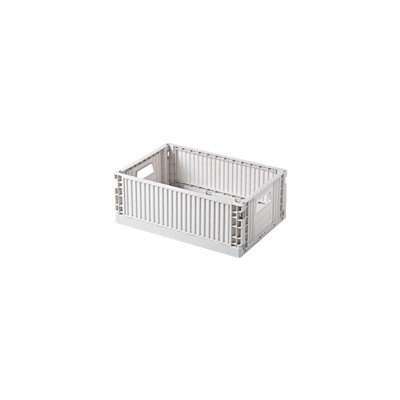
If you’re looking to upgrade your storage boxes or get personalized advice for your small space, contact our team to discuss your needs. We’re ready to help you find the perfect storage solutions that fit your space and your budget.
Storage Basket References
- Small Space Spatial Design Guidelines, Urban Planning Institute, 2022
- Residential Storage Safety Standards, Home Improvement Association, 2023
- Multi-Functional Furniture for Small Dwellings, Interior Design Journal, 2021
- Closet Space Optimization, Storage Research Institute, 2022
Hangzhou Cheerhope New Materials Co., Ltd.
As one of the most professional household storage box manufacturers and suppliers in China, we offer a wide range of products with superior quality. Please rest assured to wholesale bulk durable household storage box made in China here from our factory. Contact us for more discount information.
Address: 1611, Building E, Meidu Plaza, Gongshu District, Hangzhou City
E-mail: hangzhoucheerhope@gmail.com
WebSite: https://www.chinastoragebox.com/
