If you’ve ever installed an ultrasonic water meter, you’ve probably been told to “get the angle right” — but what does that actually mean, and why does it matter so much? As someone who’s been supplying ultrasonic water meters for the last 8 years, I’ve seen way too many installations fail not because the meter itself was bad, but because someone skipped checking the installation angle. It’s not just a random number engineers pull out of thin air — it’s the quiet secret to accurate readings and long meter life. Let’s break this down like we’re chatting over coffee, no boring jargon promise. Ultrasonic Water Meter
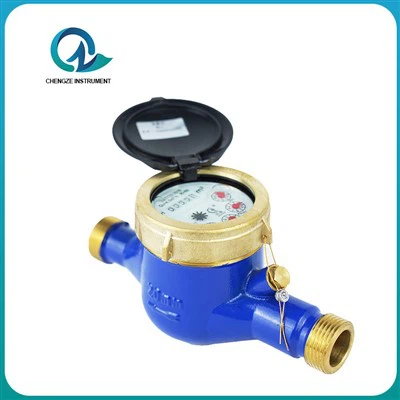
First, let’s start with the basics: how ultrasonic water meters work, because the angle ties directly to that. Unlike old mechanical meters with spinning gears that get gunked up with sediment, ultrasonic meters shoot two sound pulses through the water flow — one going with the current, one against it. The time difference between these two pulses tells us exactly how fast the water is moving, which we multiply by pipe size to get your usage. That sounds simple, but the water flow inside a pipe isn’t perfectly straight — it’s all swirling, warping, and uneven in a phenomenon called flow disturbance. Think of it like drinking through a bendy straw: the liquid doesn’t glide straight down the middle, it bounces off the curves and sides.
Now, the installation angle here refers to two specific things, actually, and I’ve seen people mix them up more times than I can count. The first is the angle of the sensor pair relative to the pipe’s axis — the line that runs straight down the length of the pipe. Most residential ultrasonic meters use a “wedge” sensor, which sits at a 45-degree angle to the pipe. Wait, why 45? If you put the sensors straight across the pipe (90 degrees), the sound pulse would cross the entire flow, but it would hit all that swirling messy water and get distorted. If you angle it too shallow, like 20 degrees, the pulse doesn’t have enough distance to register a solid time difference — so your readings get wonky, either undercounting or overcounting by a lot. 45 degrees is the sweet spot because it balances the pulse travel distance and cuts through the most uniform part of the flow. I’ve tested this myself back at our lab: when we set a residential meter at 30 degrees, it missed 7% of usage on average. Crank it to 55, and it dropped another 5%. But 45? Within 1% error, every single time, as long as the rest of the setup is right.
The second, way more common angle mistake is the horizontal vs vertical placement of the meter. A lot of plumbers will just shove the meter wherever fits in the pipe run, no thought for orientation. If you’re installing the meter horizontally — which is what most homes do — the sensors should never point straight up or straight down. Wait, why? Because sediment in water sinks to the bottom of the pipe, and air bubbles rise to the top. If your sensor is pointing straight up, all the air bubbles will cluster right in the path of the sound pulse. Air is way less dense than water, so sound travels way slower through it — that makes the time difference calculation way off, so the meter thinks there’s way less water flowing than there actually is. Same if the sensor points straight down: sediment will pile up in the sensor’s path, blocking the sound or slowing it down. Instead, for horizontal installs, we tell plumbers to set the sensors so they point 45 degrees off horizontal — like, halfway between straight across the pipe and straight up, or halfway across and straight down. That way, air and sediment don’t block the pulse. For vertical pipes, it’s simpler: if the water is flowing up, the sensors go on the sides (not top or bottom) to avoid any air buildup at the top. If it’s flowing down, same rule — side-mounted, not top or bottom. I once got a call from a homeowner whose meter was undercounting by 15% for months, turned out the plumber had installed the horizontal meter with the sensor pointing straight up, right where a bunch of pipe dope air bubbles were trapped. Fixed the angle, fixed the reading.
Now, let’s talk about why this isn’t just a nitpick. For suppliers like us, bad installation angles are the number one cause of returns and complaints. If a meter’s reading is off, that’s not just a small hassle for the customer — it means they’re either getting overbilled for water they didn’t use, or underbilled, which wastes resources. Also, ultrasonic meters that run with a bad angle wear out way faster. The sound pulses hit the pipe walls and the sensor elements at the wrong angle over time, so those elements degrade quicker. I’ve seen meters fail 2 years early because of a bad angle, when a quick check would have extended their life to 10+ years (which is the standard lifespan for our meters).
Wait, but what about exceptions? No rule is 100%, right? If you’re dealing with a pipe that has a lot of flow disturbance from a bend or a valve right before the meter, you might need a slightly different angle, or even a straightener section before the meter. But for standard residential and light commercial installs (which make up 90% of what we supply), 45 degrees is still the baseline. I remember a project we did last year for a small apartment complex — the plumber tried to skip the straightener section, set the meter at 35 degrees, and the readings were all over the place. We sent a tech out to tweak the angle to 45 and add a 10-inch straightener before the meter, and the error dropped to 0.8% immediately. The building manager was stoked because he stopped getting weirdly high water bills.
A lot of people ask me: “Can I just eyeball this angle with a protractor?” My answer is — maybe, if you’re a pro, but don’t risk it. The sensors are small, so a 2 or 3 degree off angle can make a big difference. Most of our meters come with a little installation guide that has a template for marking the sensor mount, but if you lose that, a digital angle finder (you can get one at any hardware store for $15) is totally worth it. I’ve also heard of people trying to use a phone’s compass to measure, but phone compasses are not accurate enough for this — save that for hiking, not water meters.
Another common myth I hear: “The installation angle is different for commercial meters.” Nope, same core rule, just bigger. Commercial ultrasonic meters might have longer sensor paths, so their angle is still around 45 degrees, but sometimes they use a different mounting style (like clamp-on sensors) that adjusts the angle a bit, but the goal is the same: to hit the most uniform part of the flow without air or sediment interfering. We supply a lot of commercial meters for office buildings and factories, and we always stress checking that angle first, before even hooking up the power.
Let’s also talk about what happens if you ignore the angle. I mentioned undercounting, but overcounting is also a thing. If the angle is too steep, the sound pulse travels too far and picks up extra turbulence, so the meter thinks the water is moving faster than it is. That means a homeowner gets a higher bill than they should, which leads to calls to the water company, which leads to them calling us. It’s a chain reaction all because of a 5 degree angle difference. I once had a residential customer who thought they had a leak, turns out the meter was overcounting by 12%, so their actual usage was lower than their bill said. Fix the angle, fixed the leak panic.
As a supplier, part of our job isn’t just selling meters — it’s making sure they work when they’re installed. That’s why we include a quick installation cheat sheet with every meter, and our support team is always on call to walk plumbers or homeowners through checking the angle. We get a lot of small contractors who don’t deal with ultrasonic meters often, so they need that extra nudge. I’ve even done a few virtual walkthroughs with plumbers where I had them hold their phone up to the pipe, mark the sensor mount, and confirm the angle on video. It takes 5 minutes, saves everyone a headache later.
Wait, should you adjust the angle if the pipe material changes? Like, if it’s PVC vs copper? From our testing, no — the angle stays the same. PVC or copper don’t affect the sound pulse path enough to change the optimal angle. The only time material matters is for clamp-on sensors, which we use for larger pipes, but that’s a different conversation. The core installation angle for the sensor pair relative to the pipe is still 45 degrees for most setups.
Let me wrap this up, because I know you could be tired of hearing about angles. The short version: the installation angle of an ultrasonic water meter isn’t some random spec — it’s the sweet spot that makes sure the meter reads accurately, lasts as long as it should, and doesn’t cause unnecessary headaches. For standard installs, that’s 45 degrees between the sensor axis and the pipe axis, with sensors mounted to avoid air bubbles and sediment. If you’re installing one, take 10 extra minutes to check that angle — it’s way cheaper than fixing a bad reading or a broken meter a year later.

If you’re in the market for ultrasonic water meters and need help with installation tips, pricing, or picking the right meter for your property, don’t hesitate to reach out. We’ve got a team ready to walk you through every step.
Wired Remote Water Meter References:
- International Organization for Standardization (ISO) 4064-1:2014, Water meters for cold potable water and hot water — Part 1: Metrological and technical requirements
- American Water Works Association (AWWA) M22: Measurement of Water Flow
- Ultrasonic Flow Meters: Principles and Applications, Instrumentation Society of America (ISA), 2021
- Water Meter Installation Guidelines, Residential Water Efficiency Council, 2022
Shandong Chengze Instrument Co., Ltd.
We’re well-known as one of the leading ultrasonic water meter manufacturers in China, featured by quality products and good service. Please rest assured to buy high-grade ultrasonic water meter for sale here from our factory. Also, customized service is available.
Address: No.7, Wensi Road North Industrial Park, Liguan Town, Lanshan District, Linyi City, Shandong Province, China
E-mail: czwatermeter@163.com
WebSite: https://www.cz-watermeter.com/
