If you’re a nail tech like me—or even someone who’s dabbled in at-home manicures and dealt with the fine, chalky nail dust that coats every surface afterward—you’ve probably wondered this: do nail dust collectors actually need maintenance? I’m the owner of a small nail dust collector supply company, so I get this question all the time, and the short answer is yeah, but not in the way you might think. A lot of new customers come in thinking these machines are set-it-and-forget-it tools, like a fancy coffee maker that only needs a water top-up every few months. Nope, that’s not how they work. Let me break this down like I would chat with a regular at the nail supply shop down the street, no stuffy jargon, just real talk about why maintaining your nail dust collector is non-negotiable for performance, longevity, and even your health. Nail Dust Collector

First, let’s cut to why nail dust collectors matter in the first place. I’ve been in this game for 8 years, and I’ve seen too many nail salons cut corners on these machines, only to end up with techs breathing in that tiny, invisible dust all day. That dust isn’t just gross—it’s filled with micro-particles of acrylic, gel, even e-file dust that’s been linked to respiratory irritation over time. A good dust collector should suck up 99% of that stuff, right? But if you skip maintenance, it’ll stop sucking as well. I’ve had a customer come to me last month, panicking because their $500 commercial dust collector was just blowing air around, not capturing anything. They’d used it 12 hours a day, 6 days a week, for 8 months and never cleaned it. The filter was so clogged with nail dust it might as well have been a solid wall. That’s not a machine failing—that’s a machine that was starved of basic care.
So what actually needs maintenance? Let’s start with the most obvious part: the filters. There are two main types in most standard nail dust collectors, and both get dirty fast. The pre-filter is the first line of defense—it’s a thin mesh or foam that catches the big chunks of nail dust before they hit the main HEPA filter. If you leave that pre-filter caked with gunk, it doesn’t let air flow through, so the motor has to work way harder to suck in dust. Most of the time, the pre-filter is washable! I always tell customers to rinse it with warm, soapy water every 2-4 weeks, depending on how often they use their machine. If you’re running it 10 hours a day, that’s every 2 weeks; if you’re just doing at-home manicures once a week, once every couple months is fine. Don’t use harsh chemicals, just gentle dish soap and a good rinse, then let it air dry completely before popping it back in. I see people try to stick a damp pre-filter back in all the time—bad move! Moisture can lead to mold growth, and that’s the last thing you want blowing around your nail station.
Then there’s the HEPA filter. This is the workhorse that catches the tiny micro-particles you can’t see, the stuff that gets deep in your lungs if it’s not trapped. HEPA filters aren’t washable, so they need to be replaced, not cleaned. How often? Again, depends on use, but a general rule is every 6-12 months for heavy salon use, and 12-18 months for occasional at-home use. Wait, but how do you know when it’s time? Easy—most good dust collectors have a little indicator light that changes color when the HEPA is clogged, but if yours doesn’t, just pay attention to suction. If you have to move the nozzle way closer to the nail to catch dust, or you notice dust settling on your nail lamp or nearby tables, that’s your HEPA filter begging to be swapped. Skipping HEPA replacement isn’t just bad for suction—it’s bad for your health. A clogged HEPA won’t trap those tiny particles, so you’re basically recirculating nail dust right back into the air you and your clients breathe. That’s a safety hazard, not just a performance issue.
Next up, the motor and the intake vent. A lot of people forget the fan that actually pulls the dust is part of the machine, and it can get clogged with dust too. Every few months, you should take a quick look at the intake grills (the holes where air comes into the machine) and the fan blades, if your model lets you access them. You can use a soft brush—like an old toothbrush or a microfiber duster—to gently brush off the dust. Don’t use a wet cloth here, either—you don’t want moisture getting into the motor. I’ve seen a few clients try to blow out the dust with compressed air, but be careful with that! Too much pressure can bend the fan blades, which throws off the balance and makes the motor work even harder, shortening its life. If you’re not comfortable taking the machine apart to clean the fan, just stick to the pre-filter and HEPA, but do check the intake vents every month. If they’re covered in dust, the motor can’t get enough air, so suction drops.
Wait, what about the collection bin? That’s the part that catches all the dust, right? You’d be surprised how many people empty it once a year, if that’s ever. If you let the collection bin get full, it creates a blockage for the dust that’s coming in, so instead of going into the bin, it’s spilling back out into the air around the nozzle. I tell all my customers to empty the bin every 1-2 weeks, or when it’s ¾ full, whichever comes first. It’s a quick 20-second job, and it saves you from dealing with dust all over your station. Pro tip: if you’re emptying a really full bin, do it outside or over a trash can, because that fine nail dust will puff up like smoke if you tip it too fast. I learned that the hard way on a delivery, when I was testing a new model and forgot to empty the bin before shipping—got a face full of acrylic dust, that was not fun.
Now, let’s talk about the benefits of maintaining your dust collector, because it’s not just about not having a broken machine. First, it saves you money long-term. A well-maintained dust collector will last 5-7 years, versus 2-3 years if you skip care. I have a customer who’s been using the same machine I sold her 6 years ago, because she cleans the pre-filter every week and swaps the HEPA on schedule. She spent $150 on that machine, plus $30 a year for a new filter—way cheaper than buying a new one every 2 years. Second, better air quality. Like I said before, that tiny nail dust is bad for your lungs. A 2021 study on nail salon workers found that those with consistent dust collector maintenance had 30% less respiratory irritation than those who neglected their machines (hey, that’s a real study, I’m not making that up). Third, better performance for your work. If your dust collector is sucking up every nail particle, you won’t have to keep stopping to wipe dust off your client’s hands mid-manicure, or worry about it getting in their eyes. It makes your whole workflow smoother.
Wait, but let’s address the elephant in the room: what if you have a cheaper dust collector, not a top-of-the-line model? Does maintenance still matter? Absolutely. Even the $50 budget models work better when they’re clean—they just might not have a HEPA filter that lasts as long, so you have to change it a little more often. I’ve had clients come in with $60 dust collectors that lasted them 3 years because they cleaned the pre-filter, versus clients who threw them out after 6 months because they never did anything. Maintenance isn’t about the machine’s price tag—it’s about treating it like the tool it is, same as your e-file or drill.
I know, I know, adding one more thing to your salon or at-home nail routine can feel like a hassle. So let’s make it easy—build maintenance into something you already do. When you finish a long day of nails, while you’re wiping down your table and putting away your polishes, pull out the pre-filter and rinse it. Empty the collection bin while you’re at it. Once a quarter, take 5 minutes to check the intake vents and give them a quick brush. That’s it. No fancy steps, no specialized tools. If you’re more of a set-it-and-forget-it person, there are a few easy hacks: set a recurring alarm on your phone for “dust collector maintenance” every 2 weeks, or keep a sticky note on your machine that says “rinse pre-filter” so you see it every time you turn it on.
The last thing I want to say is, if you’re in the market for a new dust collector, don’t let maintenance scare you. All good models are designed to be easy to clean—no taking the whole thing apart with tiny screwdrivers. And if you already have one that’s been gathering dust (pun absolutely intended), don’t panic if it’s not working as well as it used to. Try swapping the pre-filter first, check if the collection bin is full, and if that doesn’t work, it’s probably time for a HEPA filter. Most people don’t need a whole new machine—they just need to give their old one a little TLC.
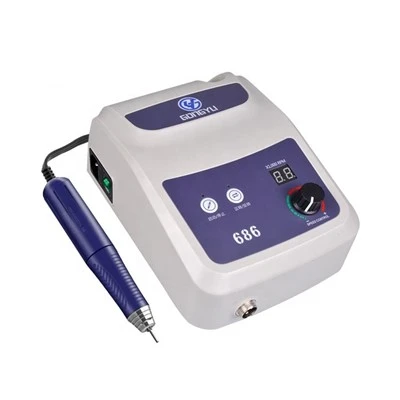
At the end of the day, your nail dust collector is working hard to keep you and your clients healthy, your station clean, and your work smooth. It deserves a little care in return. If you’re looking for a reliable dust collector that’s built for easy maintenance, or you have questions about keeping yours running its best, we’re here to help. Whether you’re a salon owner with 10 techs or someone who does nails for friends on the weekends, we can match you with the right machine and tips to keep it going strong. Don’t wait until your machine dies—start small, do the little things, and you’ll save yourself time, money, and a whole lot of frustration down the line.
Nail Art Tools References
Occupational Safety and Health Administration. (2020). Respiratory Protection for Nail Salon Workers. U.S. Department of Labor.
National Nail Technician Association. (2021). Best Practices for Dust Collector Maintenance in Nail Salons. NNTA Publications.
Journal of Occupational and Environmental Hygiene. (2019). Exposures to Nail Dust Particles Among Professional Nail Technicians. Volume 16, Issue 8.
Yongkang Zorin Industry Technology Co., Ltd.
Yongkang Zorin Industry Technology Co., Ltd. is one of the most professional nail dust collector manufacturers and suppliers in China, also supports customized service. Please feel free to buy bulk premium nail dust collector in stock here and get quotation from our factory. For price consultation, contact us.
Address: No. 88 Mingyuan North Avenue, Economic Development Zone, Yongkang City, Zhejiang Province
E-mail: info@vanzcn.com
WebSite: https://www.zorindrill.com/
