Hey guys, if you’ve ever shipped food across borders (or hired someone to do it—cough, cough, that’s us), you know it’s not just about loading pallets into a truck or a plane and hitting send. Last quarter alone, we had three near-disasters that could’ve tanked our clients, cost them thousands, and even put our own license at risk—all because we missed a tiny (but super important) legal detail. Today, let’s talk about the real, messy legal stuff that keeps cross-border food transporters up at 2 a.m. No boring jargon, just the stuff we deal with every single day, and what you need to know before you book a shipment with anyone. Food Transportation

First off, let’s get this straight: food isn’t like shipping a laptop or a pile of office chairs. It’s perishable, it affects people’s health, and every country has its own rulebook for what crosses their borders. The biggest headache? Food safety regulations that are all over the map. For example, if you’re moving berries from Mexico to the U.S., you have to comply with the FDA’s Food Safety Modernization Act (FSMA)—that means traceability records for every single batch, proof the farm used approved pesticides, and temperature logs that are timestamped down to the minute. But if those same berries are going to the EU? Suddenly you’re dealing with EFSA (European Food Safety Authority) rules, which ban a bunch of pesticides that are totally allowed in Mexico, and you need a separate Health Certificate from the Mexican food authority that specifically names each variety of berry.
We learned this the hard way last year. A small juice company hired us to import organic apples from Chile to Germany. We thought we had the right docs—until German customs flagged them because our health certificate only said “fresh apples” and didn’t specify they were organic. Oops. That meant a 10-day detainment at the port, and the apples started to spoil by the time we got them released. We ended up covering the cost of the spoiled fruit, and the client almost left us for good. Now? We have a whole team of people whose only job is to double-check every regulatory requirement per destination. No exceptions.
Then there’s labeling. This is one of those “small” things that can turn a $5,000 shipment into a total loss. Let’s say you’re sending jars of peanut butter from Canada to Japan. Canada requires labels in both English and French, but Japan wants everything in Japanese (or English with a Japanese translation that’s certified, not just Google Translate). Oh, and Japan has specific rules about how much nutritional info has to be on the label—like how much added sugar, sodium, and trans fat. We once had a client’s granola bars get rejected in South Korea because the label listed “natural vanilla flavor” but didn’t clarify that it’s from a bean, not a synthetic source (even though that was true!). The penalty? The entire shipment had to be either destroyed or sent back, which cost the client $12,000 in fees and shipping. And guess who got blamed? Yep, the transport company, even though the label was the client’s job. That’s why we now tell every new client: “We’ll do a free label check for you before we book the shipment—seriously, don’t skip this.”
Next up is customs documentation, and I’m not just talking about the basic bill of lading. For cross-border food, you need things like phytosanitary certificates (to prove the food doesn’t carry pests or plant diseases), animal health certificates if it’s meat, dairy, or eggs, and sometimes even import permits that are only valid for a certain date range. Last month, we had a shipment of frozen shrimp from Vietnam to the U.K. The client forgot to apply for their import permit 10 days in advance (it takes the U.K.’s Food Standards Agency that long to process it). The shrimp were stuck in a Hong Kong warehouse for 12 days, and by the time they got to the U.K., 15% was unusable. We didn’t charge for that shipment, but we made it clear: we can’t wave a magic wand for missing permits. Our contract now says we’ll remind clients to apply for permits, but we’re not liable if they miss the deadline. Still, it’s a pain, and we’ve had to pull all-nighters to fix last-minute permit issues more times than I can count.
Then there’s liability, which is the legal stuff that makes us sleep with one eye open. If food gets spoilt in transit, who’s on the hook? Is it the transporter? The loader? The person who packed the pallets? The client for not providing accurate temperature instructions? Let’s say you’re shipping a load of imported cheese from France to Canada. The temperature monitoring system on our truck glitches for 8 hours, and when we deliver it, the cheese is smelly and unfit to sell. Our contract says we’re liable up to $5 per kilogram, but the client paid $20 per kilogram for artisanal cheese. Do we pay the difference? Last year, we had a case like that, and it went to small claims court. We ended up paying $12,000 because the judge ruled our temperature monitoring protocol was insufficient. Now, we have every truck with two separate temperature trackers—one digital, one physical log we check every 2 hours—and we upload the data to our cloud in real time so clients can check it anytime. That’s not just for them; that’s to cover our own butts legally.
Wait, let’s not forget about sanctions and restricted countries. This is a big one that people overlook. For example, if you ship food from the U.S. to Iran, even if it’s humanitarian food like rice or flour, there are strict U.S. sanctions that ban that—unless you get a special OFAC (Office of Foreign Assets Control) license. We had a client once try to send canned beans from the U.S. to Syria, thinking “it’s just beans, what’s the harm?” We refused to take the shipment, and they got mad, but later we heard another transport company took it and got fined $250,000 by OFAC. That’s not chump change. So now we have a sanctions checklist that we go through for every single shipment—no exceptions. Even if the client swears it’s fine, we check the OFAC list, the EU sanctions list, and any other relevant ones for the origin and destination countries.
Another legal hot button is intellectual property (IP) and counterfeit food. Wait, how does that affect transport? Let’s say a client sends us a shipment of “designer” chocolate from Switzerland to the U.S., but later it turns out the chocolate is counterfeit—fake brand labels, fake certification. If we’re the ones who carried it, customs might seize the shipment, and we could get caught up in legal trouble, even if we had no idea it was fake. We had this happen two years ago with a client who said their chocolate was authentic Lindt, but it was actually a knockoff made in a small factory in Italy. Customs seized the whole shipment, and we had to give a statement, which took 3 weeks of our team’s time. Now, we ask clients for proof of authenticity for high-value or branded food shipments, and we reserve the right to refuse any shipment that raises red flags. It’s a hassle, but better than getting dragged into a counterfeit case.
Oh, and what about organic food? That’s a whole other legal ballgame. If a client is shipping organic produce, organic meat, or organic processed food, they have to be certified by the relevant body in their origin country, and that certification has to be recognized by the destination country. For example, the U.S. only recognizes organic certifications from countries that have a mutual equivalency agreement with them—like the EU, Canada, and Japan. If a client from Peru wants to ship organic coffee to the U.S., their local Peruvian organic certificate might not be enough; they need to get it certified by a U.S.-approved body, otherwise the coffee will be rejected and destroyed. We’ve had this happen twice, and both times, we worked with the client to get the extra certification, but it delayed the shipment by 7 days. We now have a list of mutual equivalency agreements for every major country so we can tell clients upfront if their certification is good to go.
Wait, let’s talk about enforcement too. What happens if you get caught breaking these laws? It’s not just a fine. You could get your transport license suspended or revoked, which would put you out of business. You could even face criminal charges if the violation is serious—like if you knowingly ship food that’s contaminated and makes people sick. We’ve seen a small transport company in California get their license pulled a couple years ago because they shipped food without proper temperature control, leading to a salmonella outbreak in a small town. No joke, that’s how serious this is.
Now, let’s get to the stuff you actually care about, if you’re a business that ships food cross-border. What can you do to avoid these legal headaches? First, do your research on the regulations for origin and destination. Don’t just Google “food shipping rules”—go to the official government websites: FDA for U.S., EFSA for EU, FSA for U.K., etc. Second, use a transporter that knows these rules. A good one will do the legwork for you, not just take your money and ship it. Third, double-check all docs and labels. Ask for proof of certification, double-check that labels are correct, and make sure permits are applied for well in advance. Fourth, get insurance that covers cross-border food. Regular cargo insurance might not cover spoilage from regulatory issues or customs detainment—ask your provider specifically what’s covered.
If you’re tired of dealing with the messy legal side of cross-border food transport, that’s what we’re here for. We’ve been doing this for over 10 years, we’ve navigated thousands of shipments, and we’ve made every mistake possible so you don’t have to. Whether you’re a small organic farm sending produce to a new market, or a big food distributor moving frozen goods across multiple continents, we can make sure all the legal boxes are checked, so your food gets delivered on time, intact, and without any headaches.
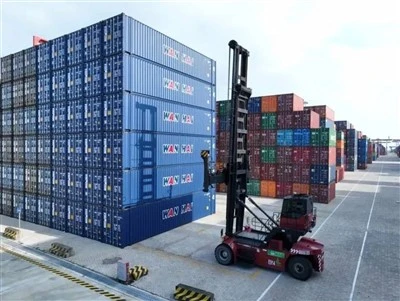
If you’re ready to book a shipment or just chat about your specific needs, hit us up to get things rolling. Let’s make your next cross-border food shipment a smooth one, no surprises, no legal mess.
FCL Shipping References
- U.S. Food and Drug Administration (FDA). Food Safety Modernization Act (FSMA).
- European Food Safety Authority (EFSA). Food Safety and Regulations.
- U.K. Food Standards Agency (FSA). Importing Food from Non-EU Countries.
- U.S. Department of the Treasury, Office of Foreign Assets Control (OFAC). Sanctions Programs.
- Codex Alimentarius Commission. Guidelines for the Cross-Border Trade of Food.
- Transport Topics. “Food Transport Liability: Navigating Cross-Border Legal Risks.” (2022)
- Food Safety and Inspection Service (FSIS). Importing Meat, Poultry, and Egg Products.
- World Customs Organization (WCO). Customs Guidelines for Perishable Food Shipments.
Shenzhen Yihua Shang Supply Chain Service Management Co., Ltd.
As an experienced international logistics company in China, we are committed to providing high quality food transportation service with low price. We warmly welcome you to contact us for more information about the cheap rate food transportation service. Also, quotation is available.
Address: 209, Building 61, Third Industrial Zone, Zhongkeng Street, Bantian Street, Longgang District, Shenzhen
E-mail: 3809486307@qq.com
WebSite: https://www.yhs555.com/
