When I first started selling seamless steel pipes over a decade ago, most of my conversations with clients focused on pressure ratings, corrosion resistance, tensile strength—you know, the bread-and-butter specs that make industrial pipes work. A few years back, though, an engineer from a boutique concert hall in the Pacific Northwest called me out of the blue with a question I’d never heard: “Can your seamless steel pipes help us with our acoustic panels?” For a second, I thought he’d misdialed. Pipes for sound? That made no sense, not until we walked through the project together, and I realized how many industries overlook the versatility of seamless steel beyond just moving fluids. If you’ve ever heard a crystal-clear piano performance in a concert hall or crisp speech in a commercial theater, you’ve got no idea how much seamless steel pipes are quietly holding that sound together. Seamless Steel Pipe
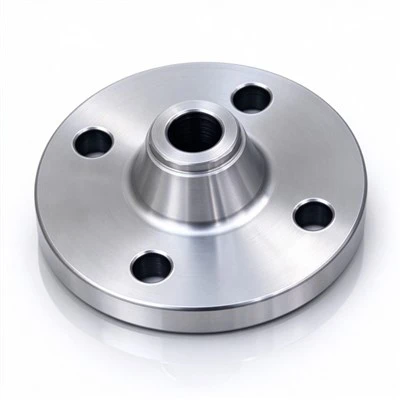
Let’s start with what makes seamless steel pipes different from welded ones, because that’s the core of their value in acoustic applications. When you weld two steel strips together to make a pipe, you create a seam—a physical line where two pieces are fused. That seam is a weak point structurally, but acoustically? It’s a nightmare. Welded pipes vibrate unevenly, their seam creates a tiny, unwanted resonance, and over time, thermal expansion or pressure changes can crack that seam, throwing off any consistent acoustic performance. Seamless pipes, on the other hand, are made by piercing a solid steel billet and rolling it into shape without any joins. That uninterrupted, homogeneous structure means they vibrate as a single unit, no hot spots, no inconsistent sound transmission. For acoustic engineers, that’s a game-changer.
Most people don’t think about sound as something that travels through solid material, but it does—really well. When you’re designing a space where sound needs to be controlled, you have to account for both airborne sound (the kind we hear directly) and structure-borne sound (the kind that travels through walls, floors, and support beams). Seamless steel pipes are perfect for controlling structure-borne sound because of their uniform density and stiffness. Let’s talk about concert halls first, since that’s where my first foray into acoustic applications happened. Those swooping, curved acoustic panels that line the walls of world-class venues? A lot of them aren’t just hollow wood or plaster. They’re lightweight structural skins stretched over a framework of small-diameter seamless steel pipes. Why seamless? Because when a musician plays a note, the vibrations from the instrument don’t travel through the framework and create a secondary, muddy sound. If that framework had a welded seam, you’d get a tiny, high-pitched echo that ruins the clarity of a violin’s G string or the warmth of a cello’s low notes. My client, that concert hall engineer, told me that after switching from welded pipe to seamless for their panel frames, the audience feedback about “muddy mid-range” stopped completely. The seamless framework let the acoustic skin vibrate exactly as intended, without distorting the sound passing through it.
It’s not just concert halls, either. Commercial movie theaters, hospitals, and even high-end recording studios rely on this same principle. In movie theaters, you need sound to stay localized to the screen, not bleed into adjacent auditoriums or bounce around so much that dialogue gets lost. The walls of most modern theaters are made of a double layer of drywall, with a gap in between filled with insulation, all supported by metal studs. A lot of those studs are seamless steel pipes—again, no welded seams to create unwanted vibrations. If a stud had a weld, the low-frequency rumble from an action movie’s bass could travel through that seam and into the next theater, or vibrate the drywall enough to create a rattling sound that’s impossible to filter out. Seamless steel pipes have uniform stiffness across their entire length, so they don’t pick up random vibrations from the building’s HVAC system or foot traffic, keeping the sound in the theater where it belongs.
Recording studios take this even further. A professional vocal booth isn’t just a room with foam on the walls—it’s a structure that’s completely isolated from the rest of the building, right down to the supports. The entire booth sits on a foundation of seamless steel pipe isolators, small-diameter pipes cut to specific lengths and mounted between the booth’s floor and the main building structure. These pipes are tuned to absorb specific frequencies of structure-borne sound, like the hum from a building’s elevator or the vibration from a delivery truck outside. Because seamless steel is so consistent, we can cut these pipes to exact lengths and diameters, and their resonant frequency is predictable—something engineers can calculate to within a fraction of a hertz. Welded pipes would have a variable resonant frequency, thanks to that seam, so you could never get the precise tuning a recording studio needs. I’ve worked with a few indie record labels that initially tried using cheaper welded pipe isolators, only to come back a month later complaining that their vocal tracks had a constant, low hum no amount of foam could fix. Swapping to seamless pipes fixed the problem overnight.
But wait—what about ductwork? A lot of people forget that HVAC systems are one of the biggest sources of unwanted noise in buildings. If you’ve ever stood near a building’s air vent and heard a low, droning hum, that’s usually the sound of the duct itself vibrating from the air moving through it, or from the fan pushing air. Seamless steel pipes are increasingly being used for specialized HVAC ductwork in acoustic-critical spaces for exactly that reason. Unlike aluminum ducting, which is thin and vibrates easily, seamless steel has a higher density, so it absorbs more of that fan and air flow noise instead of transmitting it through the building. Welded steel ducting can develop small cracks or uneven seams over time, which create extra turbulence as air flows through, amplifying noise. Seamless ducting is smooth inside and out, so air flows more evenly, reducing turbulence and the noise that comes with it. My team recently supplied 6-inch seamless steel pipe for a new hospital’s operating rooms, where even the quietest background noise can interfere with delicate procedures. The hospital’s engineers told me that after installing the seamless ducting, they cut HVAC noise levels by 12 decibels—enough to make a noticeable difference for surgeons and patients.
Of course, seamless steel pipes aren’t perfect for every acoustic application, and there’s a reason they’re not used everywhere. Their stiffness and density mean they’re really good at controlling sound, but they can also reflect sound if they’re not lined or treated properly. If you just have a bare seamless steel pipe in a room, it will bounce sound like a mirror bounces light, creating echoes or hot spots where the sound is too loud. That’s why seamless pipes are almost always paired with acoustic insulation, foam, or fabric coverings in acoustic applications—they act as a structural core, while the outer layer does the sound absorption. Another consideration is cost: seamless pipes are more expensive than welded ones, since they require more manufacturing steps and less material waste, but in acoustic projects, that extra cost is often offset by better performance and fewer revisions. I’ve had clients come back to me years after a project because a cheaper welded solution failed, and they had to rip out walls or panels to replace the pipe. Seamless pipes last for decades with little maintenance, so the up-front cost pays off over time.
Over the years, I’ve worked with everything from 1/8-inch diameter seamless steel pipes for recording studio isolators to 12-inch pipes for concert hall acoustic panels. It’s not the kind of work I expected when I started in this business, but it’s been some of the most rewarding. What surprises me most is how many industries still don’t know seamless steel has this acoustic value. Last year, a high school in rural Ohio called me because they were building a new auditorium and their general contractor had never heard of using seamless pipe for the acoustic panels. They thought we only sold pipes for oil and gas, not for sound. We sat down with their architect, walked through the specs, and helped them adjust their design to use seamless steel for the panel frames. When the auditorium opened, the choir director told me that for the first time, the students could hear themselves sing all the way to the back row, no need for extra microphones. That’s the kind of impact that makes this job worth it beyond the invoices.
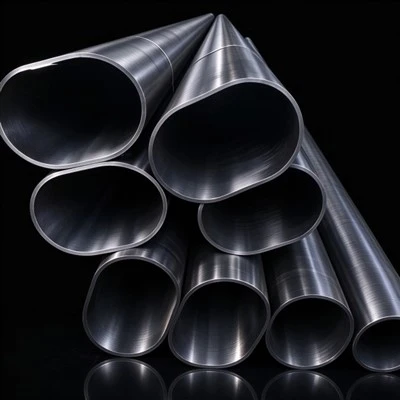
If you’re designing a concert hall, a recording studio, a hospital wing, or any space where sound quality matters, seamless steel pipes are a solution worth exploring. It’s not just a pipe—it’s a precision component that’s been engineered to vibrate evenly, absorb unwanted noise, and hold its shape for decades. I’ve seen projects go wrong because clients cut corners on structural supports, only to end up with bad sound down the line. Seamless steel isn’t the most glamorous part of an acoustic design, but it’s often the most important. If you’re working on a project and you’re not sure if seamless steel pipes are right for your acoustic needs, don’t guess. Reach out to our team to discuss your specifications, from diameter and length to resonant frequency requirements. We’ve helped engineers across industries tailor seamless pipe solutions to their acoustic needs for over a decade, and we’re ready to help you too.
Insulated Steel Pipe References
- Beranek, L. L. (2004). Concert Halls and Opera Houses: Music, Acoustics, and Architecture (2nd ed.). Springer.
- Cox, T. J., & D’Antonio, P. (2016). Acoustic Absorbers and Diffusers: Theory, Design and Application (3rd ed.). CRC Press.
- Olson, H. F. (1967). Acoustical Engineering (2nd ed.). Van Nostrand Reinhold.
- National Institute of Building Sciences. (2018). Acoustical Considerations for Healthcare Facilities. Whole Building Design Guide.
- American National Standards Institute. (2020). Acoustics – Measurement of Sound Insulation in Buildings and of Building Elements (ANSI/ASHRAE Standard 129-2020).
Cangzhou Avant International Trade Co., Ltd.
Cangzhou Avant International Trade Co., Ltd. is one of the most experienced seamless steel pipe manufacturers and suppliers in China, featured by quality products and good price. Please rest assured to wholesale bulk seamless steel pipe in stock here and get free sample from our factory. Customized orders are welcome.
Address: Room 8123, 4th Floor, Building D, Pearl Trade City, High-tech Zone, Cangzhou City China
E-mail: yans92782@gmail.com
WebSite: https://www.avant-global.com/
