What are the components of a silent generator set? If you’ve ever been in the market for one—whether for a construction site, a small business backup, or even a remote off-grid cabin—you’ve probably heard the term thrown around, maybe wondered how it’s different from a regular open-frame generator. As someone who’s been supplying silent gensets for years, let me break this down in plain talk, no jargon, no confusing fluff. First off, a silent generator set isn’t just a regular generator stuffed in a box. Every part works together to cut noise, keep things running smoothly, and meet whatever power needs you have. Let’s dive into each component, one by one. Silent Generator Set
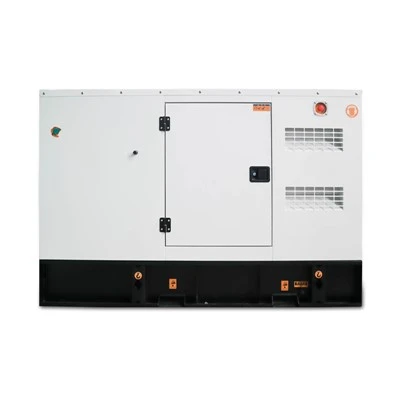
First, the core power unit: the engine. This is the heart of the whole setup, and it’s not your average small engine. Most silent gensets use diesel engines, sometimes natural gas or propane, depending on the model. Diesel’s popular because it’s more fuel-efficient, lasts longer, and delivers consistent power—perfect for heavy use. But why does it matter for silence? Wait, no, the engine itself is loud, so we wrap it in that soundproof enclosure, but the engine still needs to breathe and get fuel. A good engine here isn’t just about power; it’s designed to run at a steady RPM (revolutions per minute) instead of revving up and down, which cuts down noise a ton. I’ve seen cheap gensets with engines that rev like a lawn mower—those are the ones that sound like they’re right next to you. Our engines are tuned to run smoothly, so less vibration and less noise. That’s the first key piece.
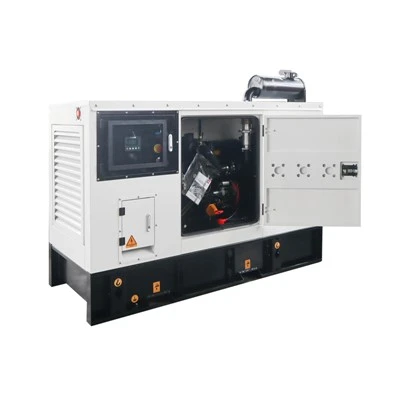
Next up: the alternator. This is what turns the engine’s mechanical energy into electrical power, right? It’s connected straight to the engine, so when the engine turns, the alternator spits out AC power. For silent gensets, we use alternators that are specifically built to be quieter than the ones on open-frame models. They’re enclosed too, and balanced to reduce vibration, which would otherwise add to the noise. A good alternator also matters for reliability—if it’s cheap, it’ll overheat or fail way sooner. I tell customers: if you’re buying a silent genset, don’t skimp on the alternator. That’s where the power you need comes from, and if it’s not solid, you’re stuck when the lights go out.
Now the part that makes it “silent” in the first place: the sound-attenuating enclosure. This is the big, boxy outer case that most people see first. It’s not just a metal box—there are layers here. The inside is lined with acoustic foam or mass-loaded vinyl, which absorbs sound instead of letting it bounce around. The walls are thick steel to block noise, not flimsy stuff that dents easily. But here’s a trick people don’t think about: the enclosure can’t be airtight. The engine needs air to run, and exhaust has to get out, so we have intake and exhaust silencers built right into the enclosure. Those are another set of components—intake silencers reduce the noise of air rushing into the engine, exhaust silencers quiet the blast of hot air and exhaust gases. Without those, even a good engine would be loud enough to disturb a neighborhood at 2 a.m. I’ve tested this myself: take the silencers off, and a genset that’s supposed to be 60 decibels (about normal conversation) jumps up to 85, which is as loud as a lawn mower. That’s a night and day difference.
Speaking of exhaust and air, there’s the cooling system. Engines get hot, so we can’t have the enclosure overheating, right? The cooling system for a silent genset is a bit different from an open one. Open-frame generators have fans that blow air straight through, but enclosed ones need a way to circulate air without making too much noise. That means we use large, slow-speed cooling fans mounted inside the enclosure, paired with a radiator that’s also housed to reduce noise. The hot air is vented out through a dedicated exhaust vent, which is silenced so it doesn’t add to the noise. If the cooling system isn’t sized right, the engine will run hot, break down faster, and the fan will have to spin faster, making more noise. We size our cooling systems exactly for the engine’s power, so it runs cool and quiet.
Then there’s the control panel. This is the “brain” of the genset, where you start it, adjust settings, and check how it’s doing. For silent gensets, we mount the control panel on the outside of the enclosure, so you don’t have to open the box every time you need to check on it. It has basic stuff: start/stop buttons, fuel level gauge, voltage meter, and for automatic models, a transfer switch input. Wait, the transfer switch! That’s a critical component I almost forgot. If you’re using a generator for backup power at a home or business, you need a transfer switch to switch your building’s power from the grid to the generator safely. Without that, you could backfeed power into the grid, which is super dangerous for line workers. Most of our silent gensets are sold with pre-wired transfer switches, or we can set them up so the control panel handles that automatically. That way, when the grid goes out, the generator turns on by itself, and the switch flips over in a second—no one has to run outside in the dark.
Let’s not forget the fuel system. That’s the tank, fuel lines, and filter. For small portable silent gensets, the tank is on the unit, but for larger stationary ones, we can connect to an external fuel tank. Either way, the fuel system has to be sealed to prevent leaks, and the fuel filter keeps dirt and debris out of the engine, which would cause it to sputter or break. We use high-quality fuel lines that don’t wear out fast, because a leak in an enclosed space is a fire hazard, plus you don’t want to be refilling it every hour. For customers who need long run times—like construction sites that need power for 12 hours straight—we size the fuel tank to match the engine’s fuel efficiency, so they don’t have to pause work to refuel all the time.
Also, vibration dampers. Wait, that’s another small but important component. The engine and alternator vibrate when they run, and if they’re bolted straight to the enclosure, that vibration will transfer through the metal, make noise, and over time, damage the unit. So we mount the engine and alternator on heavy rubber or spring vibration dampers. These absorb the vibration, so the enclosure doesn’t shake, and the noise stays inside the engine compartment, not echoing off the walls. I’ve seen gensets where the dampers were cheap rubber that crumbled after a few months—then the unit was loud, and the engine wore out early. We use industrial-grade dampers, so our gensets run smooth, quiet, and last for years.
Wait, should I mention something about the muffler? Yeah, the exhaust silencer is often called a muffler, but it’s more complex than a car muffler. It has chambers that trap sound waves, so the exhaust noise is reduced before it goes out the vent. Some of our larger silent gensets even have a wet exhaust system, where water is used to cool the exhaust and reduce noise even more—great for areas where noise regulations are super strict, like near hospitals or residential neighborhoods.
Let me put this all together to make it make sense. A silent generator set isn’t just parts stuck in a box. Each component is chosen and matched to work with the others. If you get a cheap engine, even the best enclosure won’t make it quiet. If you skimp on the alternator, you’ll have power drops. If the cooling system is too small, the engine will overheat. And if the enclosure’s soundproofing is thin, you’ll hear every rattle and hum. That’s why we spend so much time matching each component when we build our gensets—we don’t just grab a random engine and stuff it in a box.
Now, why does this matter for you? Whether you’re a small business owner who doesn’t want a noisy generator scaring customers, a construction manager who needs power during the night without disturbing nearby homes, or someone who wants reliable backup power at their cabin, the components determine how well it works. A lot of people think all silent gensets are the same, but once you understand what’s inside, you’ll see there’s a huge difference between a quality unit and a cheap knockoff.
Generator Sets Classified by Engine Brands If you’re not sure which components are right for your needs—like if you need a 10kW unit for your house or a 100kW one for a job site—just reach out. We can walk you through the different components, explain what each does for your specific use case, and help you pick the right silent generator set that fits your power needs and noise requirements. Don’t waste money on a unit that’s too loud or doesn’t have the parts to last. We’ve been doing this for years, and we know exactly what works for different scenarios, so we can guide you through every step.
References
- “Understanding Generator Components and Their Functions,” Industrial Generator Association, 2023.
- “Noise Reduction in Standby Generator Sets,” Journal of Power Systems Technology, Vol. 45, No. 2, 2022, pp. 112-128.
- “Proper Sizing of Cooling Systems for Enclosed Generators,” International Energy Agency, Small Power Generation Division, 2021.
- “Transfer Safety Standards for Portable and Standby Generators,” National Electrical Code (NEC) Handbook, 2020 Edition.
Taizhou Jinte Electromechanical Technology Co., Ltd.
We are one of the most professional silent generator set manufacturers and suppliers in China. With abundant experience, we offer a wide range of generators with superior quality. Please rest assured to buy advanced silent generator set for sale here from our factory. Customized orders are welcome.
Address: Room 207-214, Eurasia International Garden Commercial Center, Hailing District, Taizhou City
E-mail: Sales@generatorschina.com
WebSite: https://www.jintepower.com/
