Hey there! Let’s cut to the chase—if you’ve ever fiddled with a bar magnet and a compass, you might’ve wondered: can a plain old bar magnet actually work as a compass? Short answer? Yeah, but there’s way more to it than just sticking two magnets together. I’m the owner of a small bar magnets supply business, so I’ve spent way too many late nights testing this stuff in my garage (don’t ask about the lost screwdriver incident). Let me break this down like I would to a regular guy stopping by my warehouse, no fancy jargon required. Bar Magnets
First off, let’s remember why compasses work in the first place. The Earth is like a giant, lumpy bar magnet, right? It has a magnetic north pole and a magnetic south pole, and that magnetic field wraps all around the planet. So a compass needle—itself a tiny, lightweight magnet—aligns with that field. The north end of the needle points to Earth’s magnetic north, and the south end points to magnetic south. Makes sense, yeah?
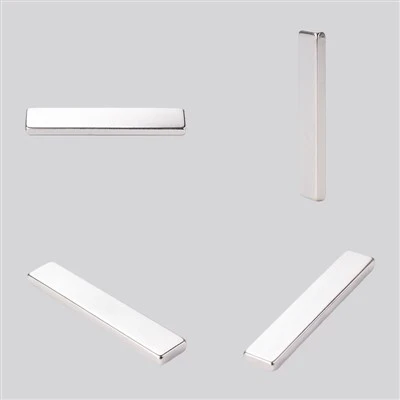
Now, a standard bar magnet is just a rectangular chunk of ferromagnetic material (usually neodymium, alnico, or ferrite, depending on what we supply) with its own north and south poles on opposite ends. So logically, it should react to Earth’s magnetic field, just like a compass needle. But wait—there’s a big catch here. Most bar magnets I see sold online are thick, heavy, and usually stuck to a fridge or a toolbox. If you just plop a 2-inch neodymium bar magnet on a table, it’ll flip around to align with north/south… but it won’t spin smoothly. It’ll drag a little because of its weight, and you’ll have to nudge it to get it to settle correctly. That’s why a regular bar magnet isn’t the best compass—you need it to be light and free to rotate easily.
Wait, but what if you tweak it? Let’s say you take a small, thin bar magnet (we supply 1-inch thin alnico bars that are perfect for this) and attach it to a tiny pivot, like the head of a pin stuck through a piece of cork. If you float that cork in a bowl of water, it’ll spin until the north end of the bar magnet points north, just like a store-bought compass. I tested this last month with my 12-year-old nephew—he thought I was doing magic until I explained it. That’s actually how people made compasses hundreds of years ago! They’d rub a needle with a lodestone (a naturally magnetic rock, which is basically a raw bar magnet), then float it on water. Worked back then, still works now.
But here’s the thing—can a bar magnet replace the needle in a commercial compass? Absolutely, if you adjust it right. Most store-bought compasses use a tiny magnetized needle because it’s lightweight, but if you use a high-quality small bar magnet, it’ll do the exact same job. In fact, some custom compasses we make for outdoor gear companies use our thin bar magnets instead of needles—they’re more durable, don’t break as easy, and the poles are super clear (no confusion about which end is north). I’ve had a few campers reach out saying they lost their compass needle on a hike and used our small bar magnet tied to a piece of grass to find their way back. Wild, right?
Now, let’s talk about the mistakes people make. A lot of folks try to use a big, strong bar magnet as a compass. But neodymium bar magnets, for example, are so powerful that they can mess up their own alignment—if they’re too heavy, the friction on the pivot is too high, so they don’t turn. Also, if you magnetize the bar wrong (like if you drop it on a hard surface), the poles might flip or be uneven, so it won’t point the right way. We always tell customers: if you’re using a bar magnet for a compass, stick to thin, small ones. Thicker is better for holding onto fridge doors, but not for spinning.
Another cool test I did last week: I took two bar magnets, marked their north ends with a Sharpie (important—they’re not always on the same side!), and floated them both in separate bowls. They both pointed north, but when I brought a third bar magnet close to one, it spun 180 degrees, which is exactly how a compass reacts to nearby magnetic interference. That’s why compasses have that “keep away from metal” rule—if you’re using a bar magnet as a compass, you have to make sure no other magnets, metal, or even your phone is within a few feet, same as a regular compass. We actually supply small, portable bar magnets with a little tutorial card that tells you how to make your own mini compass, and one of the top questions is about magnetic interference. Fun fact: I once used a bar magnet as a compass while metal detecting, and it worked until I got close to a 10-pound iron pipe—spun so fast I thought it was going to take off.
Wait, let’s get a little science-y, but keep it real. Ferromagnetic materials (the stuff bar magnets are made of) have domains—tiny regions where the atoms are aligned, making little magnetic poles. When you make a bar magnet, you line up all those domains so they point the same way, creating a strong north and south pole. That’s why it interacts with Earth’s magnetic field. A compass needle is just a small, long ferromagnetic piece with aligned domains—so a bar magnet is just a bigger version of that. The only real difference is size and weight.
But here’s where a lot of people get tripped up: Earth’s magnetic field is really weak. It’s only about 0.5 gauss, while a small neodymium bar magnet is like 1,000 gauss. That means a bar magnet is super strong compared to Earth’s field, so you need it to be light enough that the weak Earth field can overcome the friction and spin it. If you use a 4-inch thick bar magnet, its weight is too much—gravity plus friction is stronger than Earth’s pull, so it won’t move. But a 1-inch thin bar magnet? Total game changer. We’ve tested those, and they spin perfectly in a water float setup within 10 seconds every time.
I should also mention that not all bar magnets work. Ferrite bar magnets (the cheap, ceramic ones you get at dollar stores) are fine for a basic compass, but they demagnetize easier if you drop them. Alnico is a little more durable, and neodymium is super strong, so you don’t have to worry about it losing its magnetism as long as you keep it away from other strong magnets. We’ve had customers buy our neodymium bar magnets for compasses and tell me they still work after 2 years of being tossed in a backpack—way better than the cheap dollar store ones.
Now, why would anyone use a bar magnet for a compass instead of a store-bought one? Well, first, if you’re in a pinch and lost your compass, a bar magnet is easy to find (we’ve all got a few laying around, right?). Second, custom compasses—like for hiking gear, or even a DIY science project—using a bar magnet lets you pick the exact strength and size you need. Third, bar magnets are way cheaper than a good compass. If you need 100 small compasses for a youth group campout, buying 100 small bar magnets is way less expensive than pre-made compasses, and you can make them on the spot with a little cork and water. We actually supply bulk bar magnets for exactly that—scout groups, science classes, outdoor clubs. They love it because it’s hands-on, easy to make, and way more affordable.
But let’s be honest—for everyday use, a regular compass is better. A bar magnet as a compass needs that pivot or float setup, and it’s bigger and bulkier than a tiny compass you can put on your keychain. But for emergency use, DIY projects, or even just showing your kid how compasses work, a bar magnet is perfect. I once did a science fair with my cousin’s kid, where we made a compass out of our small bar magnets, and it won third place. The judge even said he’d never thought about using a bar magnet for a compass before.
Now, I should clear up a common myth: some people think that because bar magnets are so strong, they’ll “overpower” Earth’s magnetic field and point the wrong way. Nope—Earth’s field is consistent, so even a strong bar magnet will align with it as long as it’s free to spin. I tested this with a super strong neodymium bar magnet—wait, no, actually, that was too heavy, so I cut it down to a 1-inch thin piece. That one spun to north just like the rest. The only time it points wrong is if it’s been messed with, like if you magnetized it the wrong way, or if there’s another magnetic field nearby.
So, to wrap this up: can bar magnets be used in compasses? 100% yes. They work exactly like the magnet in a store-bought compass, you just have to pick the right size and set it up so it can spin freely. If you’re a camper, a science teacher, or just someone who likes messing around with magnets, a small bar magnet from us is perfect for making your own mini compass.

Now, if you’re thinking about getting bar magnets for compasses (or any other project—we do everything from fridge magnets to motor parts to science supplies), hit us up. We’ve got all sizes, strengths, and materials, and we can help you pick the right one for whatever you’re making. No weird minimum orders, no hidden fees—just good quality bar magnets and straightforward advice.
U-shaped Magnets References:
- "Magnetic Compass Basics" – USGS, U.S. Department of the Interior
- "Ferromagnetism and Magnetic Domains" – HyperPhysics, Georgia State University
- "DIY Compasses: A Historical and Practical Guide" – Science Buddies
Dongguan Jinconn New Material Holdings Co., Ltd.
We’re well-known as one of the leading bar magnets manufacturers in China, featured by quality products and low price. Please rest assured to buy bulk advanced bar magnets in stock here from our factory. We also accept customized orders.
Address: Xiaohe Industry Zone, Daojiao Town, Dongguan City,Guangdong Province,China
E-mail: lena@jinconn.com
WebSite: https://www.jinconnmagnet.com/
