Hey everyone, if you’ve ever worked in manufacturing, construction, or even just tinkered with metal projects, you’ve probably heard the term “yield strength” thrown around like it’s just another metal industry buzzword. But for anyone buying hot rolled carbon steel (that’s our thing here, btw), knowing exactly what that number means isn’t just a nice-to-have—it’s how you avoid costly mistakes and get exactly the material your project needs. Let’s break this down straight, no stuffy textbook jargon, and even throw in a few real-world bits from our years as a hot rolled carbon steel supplier. Hot Rolled Carbon Steel
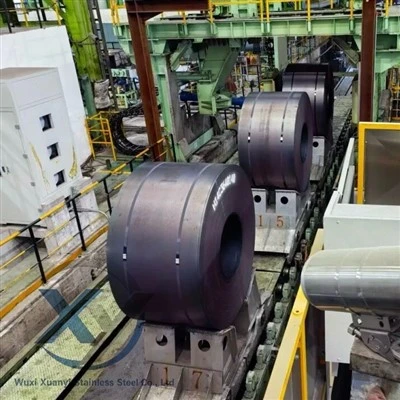
First, let’s keep it simple: yield strength is the maximum amount of stress (force per unit area) a metal can take before it permanently bends or deforms. Think of it like stretching a rubber band—pull it a little, it springs back. Pull it past its yield point, and it stays stretched forever. For hot rolled carbon steel, that number isn’t one-size-fits-all. It depends on a few key things: how much carbon’s in the mix, the grade (yeah, there are grades, way more than just “hot rolled steel”), and even how it was rolled at our mills. That’s why we never just say “our hot rolled steel has a yield strength of X”—we tailor it to what you need.
Let’s start with carbon content, because that’s the biggest driver. Hot rolled carbon steel is split into three main buckets: low, medium, and high carbon. Each has its own yield strength range, and that’s exactly why customers come to us asking for specific grades. Low carbon steel—sometimes called mild steel—has less than 0.3% carbon. It’s the most common stuff you see for things like car bodies, structural beams, or even backyard fences. Its yield strength usually lands between 30,000 and 50,000 psi (pounds per square inch) or 205 and 345 megapascals (MPa for you metric folks). Wait, let’s ground that in real terms: if you used mild steel to make a workbench frame, it’ll hold up to a heavy tool chest without bending, but if you hang that same chest from a mild steel hook, that hook might stretch permanently over time. That’s the yield point at work.
Next, medium carbon steel has 0.3 to 0.6% carbon. This is where yield strength goes up, usually 50,000 to 80,000 psi (345 to 550 MPa). It’s stronger than mild steel, so it’s used for things like gears, axles, and some structural parts that need a bit more oomph. Say you’re building a conveyor system for a factory—medium carbon hot rolled steel would be perfect for the drive shafts here, since they don’t just hold weight; they’re twisting under load. Too low yield strength, and that shaft might twist out of shape mid-run, stopping your whole line. We get calls all the time from fabricators who messed up with mild steel for conveyor parts, and we have to steer them to medium carbon. Oops.
Then high carbon steel, with over 0.6% carbon. That’s your tough stuff—used for springs, cutting tools, railroad rails. Its yield strength jumps to 80,000 psi and up, sometimes even 100,000 psi (550 to 690 MPa or higher). I remember a customer last year making industrial saw blades—they tried low carbon first, and the blades bent after a week of use. Switched to our high carbon hot rolled steel, and those blades lasted three months. That’s yield strength doing exactly what it’s supposed to: resisting permanent deformation under repeated stress.
Now, let’s talk about the “hot rolled” part, because that’s not just a marketing term. Hot rolling happens at temperatures above 1700°F, way above the recrystallization point of steel, which means it doesn’t work-harden as much as cold rolled steel. Wait, why does that matter for yield strength? Cold rolled steel has higher yield strength because it’s pressed at room temp, which makes the metal’s grains tighter. But hot rolled is more ductile, so its yield strength is a bit lower, but it’s easier to form, weld, and machine. That’s a key difference for our customers—if you need something you can bend into a shape on-site without cracking, hot rolled’s yield strength is ideal, even if it’s a little lower than cold rolled. We always explain that to new buyers, because too many people think “stronger is better” and end up with a material they can’t cut or bend easily.
Wait, let’s get specific with common hot rolled carbon steel grades, because that’s where yield strength gets concrete. A36 is the workhorse of structural hot rolled carbon steel—you’ve definitely seen A36 beams for buildings. Its yield strength is 36,000 psi (250 MPa), and that’s standardized, so you can trust every A36 plate we sell to hit that number. That’s why it’s code-approved for construction—engineers know exactly how it’ll perform under load. Then there’s A572 Grade 50, which is a high-strength low-alloy (HSLA) hot rolled steel. Its yield strength is 50,000 psi (345 MPa), way higher than A36, so it’s used for lighter but stronger bridges, cranes, and heavy equipment frames. A lot of our customers choose A572 when they want to cut down on material weight without sacrificing strength—fewer tons of steel mean lower shipping costs, too. We love when that clicks for people.
Now, let’s clear up a common myth: yield strength vs. tensile strength. People mix these up all the time. Tensile strength is the maximum stress steel can take before it snaps, right? Yield strength is when it starts to permanently bend. So if you pull a piece of steel until it yields, you can bend it back into shape? No, wait—permanently deformed, so you can’t. If you pull it to tensile strength, it breaks. For A36, tensile strength is around 58,000 to 80,000 psi, so yield is the lower number, which makes sense—you don’t want a structural beam to reach its tensile strength before it bends a little, because that’s the first sign something’s wrong. As a supplier, we always tell customers to check yield strength first, because that’s the limit for serviceable use. Tensile strength is just the breaking point, which you hope you never reach.
What affects yield strength besides carbon and grade? Let’s talk about mill process. At our facilities, we control the rolling temperature and cooling rate to hit exact yield strength specs. If we cool hot rolled steel too fast, it gets a little harder, yield strength goes up. Cool too slow, it’s softer. That’s why we work closely with our mills to make sure every coil or plate we send has the yield strength the customer ordered—no guessing. We had a issue a few years back where a new batch of A572 was coming in a few thousand psi under spec, and we caught it before shipping to a construction job. That’s the stuff that keeps customers coming back—we don’t cut corners on quality.
Also, thickness matters, a lot. Thinner hot rolled steel sheets have higher yield strength than thicker plates. Why? Because thicker steel has more grain structure, so it’s a little more prone to deformation. For example, a 1/4-inch A36 sheet has a yield strength around 36,000 psi, but a 1-inch A36 plate might be around 34,000 psi. That’s a small difference, but for projects with tight load requirements, it’s big. We always list yield strength by thickness on our product sheets, so customers don’t make a mistake buying a thick plate when they need a thin sheet for a precision part.
Now, let’s get to the part that matters most for you, the buyer: how to pick the right yield strength for your project. If you’re building a backyard shed or a small table frame, low carbon (mild) steel’s 30k-50k psi yield is more than enough, and it’s cheap, easy to weld, perfect. If you’re making a heavy-duty cart that carries 1,000 lbs, medium carbon steel’s 50k-80k psi is better. If you’re making a spring that compresses and expands thousands of times, high carbon’s 80k+ psi is non-negotiable. We’ve even had a customer making wheelchair frames—they needed something light but strong enough to hold a 200-lb person, so we suggested A572 Grade 50, which worked out perfectly. They told us later it cut their material weight by 15% compared to using mild steel.
Wait, let’s address a question we get all the time: can yield strength change over time? Yes, actually. Hot rolled steel can experience “stress relaxation” or “aging,” where yield strength increases a little, but it gets more brittle. That’s why you don’t want to store hot rolled steel for years before using it—especially high carbon. We always tell customers to order what they need when they need it, because stale material can have unexpected properties. That’s another reason we’re not just a supplier; we’re a resource. We’ll help you time orders so your material is fresh and performs as expected.
Let’s wrap this up with a real example from our work. Last month, a fabricator came to us panicking. They’d used a different supplier’s mild steel for a set of 12 truck trailer frames, and after welding, a third of the frames were bending when hung. We tested the steel, and its yield strength was only 28,000 psi—way lower than the 36,000 psi A36 spec. We replaced the frames with our A36 hot rolled carbon steel, which hit 36,500 psi yield, and they’ve had zero issues since. That’s exactly why knowing yield strength isn’t just numbers on a page—it’s preventing lost time and money.
If you’re working on a project right now and not sure which hot rolled carbon steel grade or yield strength you need, don’t guess. Reach out to us. We’ve been doing this for years, we know our material inside and out, and we’ll walk you through what’ll work best. No sales pitch, no confusing jargon, just straight advice. We can send you spec sheets, talk through your load requirements, even tell you which thickness is right for your design.

You can always look up more details on hot rolled carbon steel yield strength in industry standards, but for the real-world, on-the-ground stuff that matters for your project, hit us up. We’re here to help you get the right material, at the right yield strength, so your project goes smooth.
Hot Rolled Reinforcing Bar References:
ASTM A36/A36M, Standard Specification for Carbon Structural Steel
ASTM A572/A572M, Standard Specification for High-Strength Low-Alloy Columbium-Vanadium Structural Steel
MetalTek International, "Yield Strength: What It Means for Metal Fabrication"
ASM International, "Hot Rolled Steel: Properties and Applications"
Wuxi Xuanyi Stainless Steel Co., Ltd.
Wuxi Xuanyi Stainless Steel Co., Ltd. is one of the most professional hot rolled carbon steel manufacturers and suppliers in China. With abundant experience, we warmly welcome you to wholesale bulk durable hot rolled carbon steel made in China here from our factory. If you have any enquiry about cooperation, please feel free to email us.
Address: Room 1207, Building 11, Shengang Metropolis Plaza, No. 299 Fangcheng Avenue, Xinwu District, Wuxi City,China.
E-mail: jscherryxy@163.com
WebSite: https://www.xuanyisteel.com/
