If you’ve ever worked in wastewater treatment, mining, or industrial sludge management, you’ve likely heard the term “anionic polyacrylamide” (APAM) thrown around—but it’s easy to treat it as just another generic chemical you dose into a tank and hope for results. As someone who’s spent 12 years as an APAM supplier, I’ve talked to hundreds of operators who know they need it, but few who fully grasp why it works so well for sludge dewatering. Let’s break down the science, not just to check a box, but to help you make the most of the product you’re already investing in. Anionic Polyacrylamide
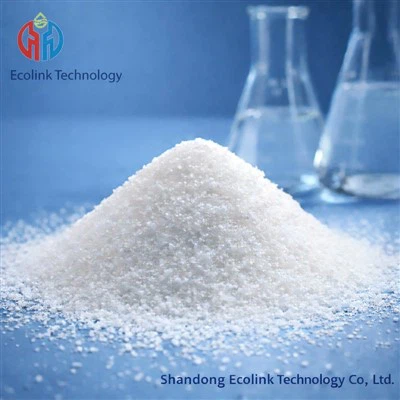
First, let’s set the scene: sludge isn’t just wet mud. It’s a complex mix of tiny, negatively charged solid particles—think bacterial cells, organic debris, residual chemicals, and fine mineral fines—suspended in water. For sludge dewatering, your goal is to pull that water out so the remaining solid cake is dry, easy to handle, and cheaper to dispose of. The problem is those negatively charged particles repel each other, keeping the sludge dispersed and stable; without a bridge to link them up, they’ll never clump into heavy enough flocs to separate from water. That’s where APAM steps in.
Let’s start with the basics of anionic polyacrylamide’s structure. Polyacrylamides are long-chain polymers made of repeating acrylamide units, but APAM has been modified to add anionic (negative) functional groups—usually carboxylate groups (COO⁻) from the hydrolysis of some acrylamide monomers. This structure is critical, and it’s why APAM works better than other flocculants for many sludge types.
The core mechanism at play here is charge neutralization and inter-particle bridging—two processes that don’t work the same way for cationic or nonionic polyacrylamides, especially for sludge that’s high in organic content. Let’s walk through each step in order, because it’s not just dumping APAM into sludge and watching flocs form.
First, the charge repulsion problem in sludge. Sludge particles carry a negative zeta potential, usually between -10 and -40 millivolts (mV), depending on its source: biological sludge from municipal wastewater can be around -25 to -35 mV, while industrial sludge from food processing or textile manufacturing might be even more negative. That negative charge means every particle pushes away its neighbors, so they stay spread out, and water gets trapped between them—making the sludge thick, runny, and hard to dewater with a belt filter press or centrifuge.
APAM’s anionic groups seem like they should repel those negative particles, right? That’s a common question I get from new operators. The key here is that sludge isn’t just negative particles. It also has trace amounts of positively charged ions—calcium (Ca²⁺), magnesium (Mg²⁺), aluminum (Al³⁺), or residual cationic polymers from earlier treatment steps. Those positive ions act as a bridge between the anionic APAM and the negative sludge particles. It’s like a matchmaker: the anionic end of APAM grabs onto the positive ions, and the other end of the long polymer chain reaches out to grab a negatively charged sludge particle. Once two particles are linked by that polymer, you start to get flocs.
That’s the inter-particle bridging mechanism, and it’s where APAM really shines. Unlike small, single-charge flocculants like alum or ferric chloride, APAM is a long molecule—its molecular weight can range from 5 million to 20 million Daltons, so one polymer chain can attach to 50 to 200 sludge particles at once. That means instead of small, loose flocs, you get large, dense, stable flocs that don’t break apart easily during dewatering. If you’ve ever struggled with flocs falling apart when you run sludge through a filter press, it’s probably because you’re using a polymer with too low a molecular weight, or you didn’t mix it properly so the chains couldn’t form those bonds.
Let’s get into the details of the process step by step, so you can troubleshoot if your dewatering isn’t hitting the targets it should. First, polymer preparation: APAM comes as a dry powder or liquid emulsion, and it has to be hydrated properly. If you mix it too fast, you get lumps of unhydrated polymer that can’t form long chains; if you mix it too slow, it takes too long to dissolve, and the chains break down. As a supplier, we always tell operators to use a low-shear mixer, at a concentration of 0.1% to 0.5% for dry APAM, and let it hydrate for 30 to 60 minutes—longer for higher molecular weight grades. If you skip that step, the polymer can’t act as a bridge, and you’ll get poor floc formation, excess polymer usage, and wet cake.
Next, dosing: the amount of APAM you add is non-negotiable. Too little, and you don’t have enough polymer to link all the sludge particles, so flocs stay small. Too much, and you get charge reversal: the excess anionic polymer covers all the positive ion sites, so the sludge particles go back to having a negative charge, repel each other, and flocs break apart. I’ve seen operators increase dosage because they thought more would help, only to end up with worse dewatering and higher chemical costs—so it’s all about the optimum dose, which is usually between 1 and 10 kg of APAM per ton of dry sludge, depending on the sludge type.
Now, why anionic specifically, instead of cationic? Cationic polyacrylamides (CPAM) have positive groups, so they work by directly neutralizing the negative charge of sludge particles, which makes them good for sludge with high negative charge. But for sludge that’s high in organic matter—like primary sludge, digested sludge, or industrial sludge from breweries or pulp and paper—those organic particles are often more hydrophobic, and the high levels of divalent cations (Ca²⁺, Mg²⁺) in the sludge water make anionic APAM far more effective. Those divalent cations form “cation bridges” between the anionic polymer and the organic particles, creating flocs that are stronger and more porous, which lets water escape faster during dewatering. I’ve had customers switch from CPAM to APAM and cut their polymer costs by 30% while increasing cake solids by 5-7%—that’s a huge difference in disposal costs.
Another point: floc structure from APAM is less compact than flocs from CPAM, which sounds like a bad thing, but it’s actually ideal for dewatering. Porous flocs have more space between them, so water can drain out easier. Compact flocs tend to squeeze water out unevenly, leaving pockets of wet sludge that slow down the filter press cycle or cause carryover in centrifuges. That’s why APAM is often the go-to for belt filter presses, which rely on porous flocs to form a consistent cake.
Now, let’s talk about some common misconceptions that I hear all the time. First, “higher molecular weight APAM is always better.” Not necessarily. For fine, dense mineral sludge (like from mining tailings), a high molecular weight APAM works great because the particles are small and need long chains to link them. But for very dilute sludge, a medium molecular weight grade is better—high molecular weight can make flocs too big, which can clog filters or be too heavy to separate. It’s about matching the APAM grade to your specific sludge, which is why as a supplier, we always work with customers to test their sludge first.
Another misconception is that APAM only works with municipal sludge. We supply APAM to mining, textile, pharmaceutical, and food processing industries, and each one has a slightly different mechanism at play. For mining tailings, the sludge is mostly negatively charged silica particles, and calcium ions in the process water act as the cation bridge. For textile sludge, which has residual dyes and organic fibers, the anionic groups bind to the negatively charged fiber surfaces, and the long chains link them into large flocs that can be easily separated.
Let’s also touch on floc stability. Once the flocs form, they need to stay intact through the dewatering process. That’s where the bridging mechanism gives APAM an edge. The long polymer chains wrap around the sludge particles, creating a physical bond that’s stronger than the charge-only bonds of smaller flocculants. So when the filter press cloth pulls tight, or the centrifuge spins at high speed, the flocs don’t break apart, and you get a consistent cake. If you’ve ever had cake that falls apart during transport, or gets wet enough to leak, that’s a sign your flocs weren’t stable enough—usually from using the wrong polymer or not hydrating it properly.
Now, what about environmental considerations? APAM itself is non-toxic, but when it’s applied to sludge, it doesn’t leach out into the final cake. The flocs are stable enough that the polymer stays bound to the sludge particles, so when you dispose of the cake (or use it for land application, if it’s compliant), it doesn’t release harmful chemicals. That’s another reason APAM is preferred over some alternative flocculants, like alum, which can add excess aluminum to the sludge.
I should also mention testing, because no two sludge streams are the same. Last year, a customer from a food processing plant called me, saying their dewatering process was producing cake with only 18% solids—way below their target of 25%, so their disposal costs were through the roof. They were using a cationic polymer that was costing them $12,000 a month. We took a sample of their sludge, ran a jar test with three different APAM grades, and found that a medium molecular weight anionic APAM at 4 kg per ton of dry sludge gave them 27% cake solids, and cut their polymer cost to $6,500 a month. That’s the power of understanding the mechanism: it’s not just about the product, it’s about matching it to your specific sludge and process.
So, to wrap up the mechanism of APAM in sludge dewatering in plain terms: negatively charged sludge particles repel each other, keeping water trapped. APAM’s long anionic polymer chains use trace positive ions in the sludge water as bridges to link those negative particles together, forming large, porous, stable flocs. These flocs let water drain out easily during dewatering, resulting in a drier cake that’s cheaper to handle and dispose of. The key factors are proper polymer hydration, dosing at the optimum point, and choosing the right molecular weight grade for your sludge type.

If you’re dealing with sludge dewatering issues—high disposal costs, wet cake, inconsistent floc formation—we can help. Our team works with operators across industries to test sludge, recommend the right APAM grade, and optimize your dosing process. Reach out to us to discuss your specific needs and find a solution that works for your operation.
Nonionic Polyacrylamide References
- Bolto, B., & Gregory, J. (2007). Organic polyelectrolytes in water treatment. Water Research, 41(11), 2301-2324.
- Chen, G., & Yue, Q. (2012). Sludge dewatering with polyacrylamide: A review. Journal of Environmental Management, 95(Suppl 1), S117-S121.
- Mikkelsen, L. H., & Keiding, K. (2002). Physico-chemical characteristics of full scale sewage sludges with implications to dewatering. Water Research, 36(10), 2451-2462.
- Zeta Potential Handbook: Applications in Water and Wastewater Treatment. (2018). American Water Works Association.
Shandong Ecolink Technology Co., Ltd.
Shandong Ecolink Technology Co., Ltd. is one of the most reliable anionic polyacrylamide manufacturers and suppliers in China. We warmly welcome you to wholesale bulk high quality anionic polyacrylamide from our factory. If you have any enquiry about cooperation, please feel free to email us.
Address: No. 8, Xiaying Chemical Industry Park, Aobu Road, Xiaying Town, Changyi City, Weifang City, Shandong Province,China
E-mail: sale02@ecolink-environment.com
WebSite: https://www.ecolink-environment.com/
