Hey there, let’s cut the fluff here—if you’re standing in front of a gear motor spec sheet wondering whether to grab a brushed DC planetary gear motor or a brushless one for your application, you’re not alone. As someone who’s spent the last 10 years selling and trouble-shooting these bad boys for all kinds of clients (from small robotics startups to conveyor system guys), I’ve heard this question so many times I could probably answer it in my sleep. But let’s do this right, no jargon, just what actually matters for your use case, not the textbook stuff that never applies in real life. DC Brush Planetary Gear Motor
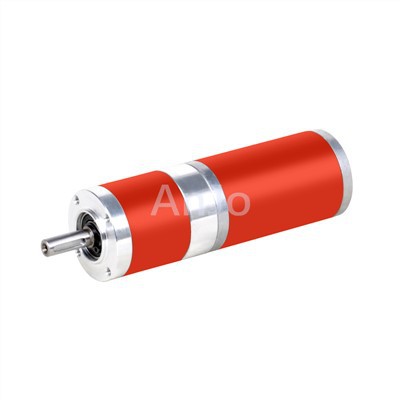
First, let’s get one thing straight: I’m not here to shill my own product right off the bat, but let’s be transparent— I sell brushed DC planetary gear motors, so you might wonder why I’m not just saying “brushed is always better.” Fair question, and I’ll tell you why: sometimes brushless is the obvious call. The key here is matching the motor’s pros and cons to exactly what you’re trying to do, not what’s trendy. Let’s break this down by the stuff that actually impacts your project: cost, maintenance, size, power needs, run time, and reliability.
Let’s start with brushed motors, since that’s my wheelhouse. If you’re not familiar, brushed DC motors use little carbon brushes that rub against a commutator on the motor shaft to switch current, which makes the rotor spin. Pair that with a planetary gear head, and you’ve got a motor that’s tough, cheap, and easy to control. I’ve seen these work in everything from small DIY robot arms to automated vending machines that run 8 hours a day. Why? First off, cost—brushed motors are way cheaper to build than brushless. The parts are simpler, no fancy permanent magnets or electronic speed controllers (ESCs) built right in. For a startup on a tight budget, or a project where you don’t need to run the motor 24/7, that’s a game-changer.
Maintenance is another big one. Wait, I know what you’re thinking—brushes wear out, right? Yeah, but here’s the thing: for most applications, that wear is minimal. If you’re not running the motor non-stop for months at a time, replacing brushes every 1-2 years is nothing. It’s like changing the oil in your car—super simple, doesn’t cost much, and it’s a trade-off for a motor that’s way easier to troubleshoot. If your brushed planetary gear motor stops working, 9 times out of 10, you can pop off the end cap, swap a $5 brush, and be back up and running in 10 minutes. No weird error codes, no specialized tools, no waiting for a technician. That’s a huge win for smaller teams or field operations where you can’t afford downtime.
Also, control simplicity. Brushed motors run on basic DC voltage—just hook them up to a power supply and a simple switch or a cheap speed controller, and you’re done. Brushless motors need that built-in ESC, which adds another layer of wiring, another point of failure, and another cost. If your application is something like a gate opener that only needs to move a few pounds, or a small conveyor that runs at a fixed speed most of the time, you don’t need that extra complexity. Brushed planetary gear motors also have great torque at low speeds, which is perfect for gear-driven applications—planetary gears are designed for that, and pairing them with a brushed motor gives you that snappy, consistent torque without fuss.
Now, let’s talk about where brushed motors might not cut it. If you need the motor to run 24/7, or if you’re pushing it hard with high loads, brushless is usually better. Brushes wear out faster under constant high load, so you’ll be replacing them way more often. Also, brushed motors generate a little more heat and a tiny bit of electrical noise—if your application has sensitive electronics nearby, like a camera on a robot, that noise might cause glitches. That’s not a deal-breaker for most stuff, but it’s something to keep in mind.
Now, brushless DC planetary gear motors. These use permanent magnets on the rotor and electronic commutation, so no brushes rubbing—no wear, no brush replacement. That’s their biggest selling point. If you need the motor to run non-stop, like in a hospital ventilator pump or a commercial conveyor that runs every hour of every day, brushless will last way longer. They’re also more efficient—they convert more of the electricity they use into motion, so they use less power, which is great for battery-powered applications like drones or portable robotics. If your device runs on a battery that you need to last as long as possible between charges, brushless is the way to go. No extra energy wasted on brush friction, so longer battery life.
Brushless motors also run quieter, which is a big deal for things like home robots, medical devices, or office equipment where noise is a problem. They don’t have that little whine from brushes rubbing, so they’re way more discreet. And they handle high speeds better than brushed motors, though when you pair them with a planetary gear head, that speed gets reduced to torque, so that’s less of a factor for gear motor use cases.
But here’s the catch with brushless: cost. They’re way more expensive, both upfront and over time. The ESCs, the permanent magnets, the precision commutation parts—they add up. For a small project, that extra cost might not make sense, even if you get longer run time. Also, brushless motors are way harder to troubleshoot. If one stops working, it’s usually a problem with the ESC or the commutation circuit, not something you can fix with a simple swap. You’ll probably have to replace the whole motor, or send it back to the manufacturer, which means more downtime and cost.
Also, size. Wait, no—brushless motors can be smaller for the same power, but the whole package (motor plus gear head plus ESC) is often bulkier than a brushed planetary gear motor. If you’re working with tight space constraints, that’s a thing to consider. I’ve had clients come to me trying to fit a motor into a 2-inch space, and 9 times out of 10, a brushed one fits better than a brushless with its built-in controller.
Let’s make this concrete with a couple of real examples, not hypothetical ones. Last year, a local robotics startup came to me asking for a motor for their small warehouse picker robot. They were running on batteries, so they initially thought brushless would be better for battery life. But when we crunched the numbers: their robot only runs 8 hours a day, charges overnight, the load is only 10 pounds, and their budget was tight. We went with a brushed planetary gear motor, and they saved 30% on the motor cost, and maintenance has been zero—they’ve run it for 6 months without any issues, no brush replacement needed yet. On the flip side, a medical device client of mine needed a pump that runs 24/7 in a clinic, no downtime allowed. They went with brushless, and it’s been running for 2 years now, no maintenance, no replacement parts needed. That’s exactly the trade-off.
Another thing to consider: your application’s duty cycle. If it’s intermittent use (like a garage door opener, a vending machine motor, a small automation gate), brushed is perfect. If it’s continuous duty (like a conveyor in a factory, a medical pump, a drone motor), brushless is the move. Also, if you plan to scale production, brushless might make sense if you’re making thousands of units, because the long-term maintenance cost is lower. But for low-volume runs, brushed is way more cost-effective.
Wait, but let’s not forget about planetary gear heads specifically, because that’s the other part here. Planetary gears are way more efficient than spur gears, right? So both brushed and brushless paired with planetary gear heads will give you better torque and less power waste than other gear types. But when you’re combining them, the brush’s friction adds a tiny bit of power loss in brushed motors, which brushless avoids—so for high-power applications, that adds up. But for most low-to-medium power applications (under 100 watts), that power loss is negligible, and brushed’s cost savings are way bigger.
I’ve seen a lot of clients overcomplicate this. They see “brushless” in a spec sheet and think it’s automatically better, but that’s not true. I once had a guy come to me who had installed a brushless motor in his small automatic gate, and he was over the moon about it—until his ESC died, and he had to wait a week for a replacement, and it cost him twice as much as the motor itself. If he’d gone with a brushed one, he could have replaced the whole motor for a quarter of the cost in an hour, no downtime. That’s the kind of real-world stuff the textbooks don’t tell you.
Another point: environmental factors. If your application is in a dusty or dirty place, brushes can actually be a plus? Wait, hear me out—dust can get on brushless commutation circuits and cause issues, but carbon brushes are pretty forgiving. They’ll just wear a little faster, but you can swap them easily. If you’re running a motor in a farm or a construction site where dust and debris are common, brushed planetary gear motors hold up way better than brushless ones, which have tiny electronics that can get gunked up.
So let’s wrap this up with a simple checklist you can run through right now, no jargon:
- What’s your budget? If you’re on a tight budget (for a prototype, small project, low-volume production), go brushed. It’s cheaper upfront, and for intermittent use, you won’t even notice the maintenance cost.
- Duty cycle: Do you need this motor to run 8+ hours a day, non-stop? Go brushless. Brushed brushes will wear out fast, and you’ll have downtime.
- Power source: Is it battery-powered, and do you need every last minute of run time? Brushless is more efficient, so better battery life. If it’s plugged into the wall, brushed is fine.
- Space and simplicity: Do you have a tight spot for the motor, or do you want something easy to wire and troubleshoot? Brushed is smaller, simpler, no extra ESC to mess with.
- Environment: Dusty, dirty, or rough conditions? Brushed is more forgiving, easier to clean, and parts are cheap to replace.
If you’re still not sure, that’s totally fine. Every application is unique, and I’ve helped so many clients work through this. At the end of the day, the worst thing you can do is overengineer a motor for your project. I’ve seen startups spend $500 on a brushless motor when a $100 brushed one would have worked just as well, and that’s money they could have put into building a better product. Or conversely, a factory that tried to save money on a brushed motor for a 24/7 conveyor, and ended up paying thousands in downtime and maintenance.

If you’re currently working on a project and need a second opinion, or you have specific specs you’re working with (load, run time, budget, environment), I’m here to help. I don’t just sell motors—I’ve built stuff with them, I’ve fixed stuff with them, I know what works in the real world. No sales pitches, no pressure, just straight talk. Hit me up, and we can walk through your exact needs to figure out what’s right for you. It doesn’t matter if you’re a one-man startup or a big factory, I’m happy to help.
Cycloidal Gear Motor References:
- "DC Motor Technology: Brushed vs. Brushless" – Motion Control Today, 2022
- Planetary Gear Motor Efficiency and Application Guidelines – IEEE Industry Applications Society, 2021
- Maintenance Requirements for Small Gear Motors – National Institute of Standards and Technology (NIST), 2020
- Battery-Powered Robotics Motor Selection – International Journal of Robotics Applications and Technologies, 2023
Hangzhou ANG Drive Co., Ltd.
We’re well-known as one of the leading dc brush planetary gear motor manufacturers and suppliers in China, also support custom service. Please feel free to wholesale high quality dc brush planetary gear motor made in China here from our factory. Contact us for more details.
Address: No.185, Jincheng Rd., Hangzhou 311202, China
E-mail: export6@angdrive.com
WebSite: https://www.angdrive.com/
