If you’ve ever purchased antimicrobial products for water treatment, surface disinfection, or industrial equipment sanitization, chances are you’ve come across polyhexamethylene guanidine (PHMG) — a polymer that’s become a staple for its broad-spectrum germ-killing power. But as a PHMG supplier, I get asked one question more than any other: “How stable is it, really?” It’s not a trivial question, either. Stability makes or breaks a chemical’s performance, its shelf life, and how reliably it works for your operations. I’ve been working with PHMG for over a decade, fielding questions from municipal water managers to food processing plant safety officers, and the short answer is: PHMG is remarkably stable, but that stability isn’t one-size-fits-all. It depends on how it’s formulated, stored, and even what it’s mixed with. Let me walk you through the science, the caveats, and what that means for anyone relying on this chemical. Polyhexamethylene Guanidine
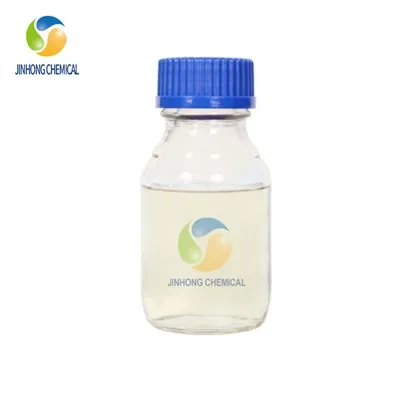
First, let’s get a quick refresher on what PHMG is, because its structure is the foundation of its stability. PHMG is a cationic polymer, built from repeating guanidine groups linked by hexamethylene chains — that’s the six-carbon (or hexamethylene) backbone that gives the polymer its name. Guanidine groups are highly reactive nitrogen-rich molecules, but when strung together in a polymer chain, they form a large, slow-moving molecule that doesn’t break down easily under most common conditions. That’s the key to its stability: the polymer’s large molecular weight and the covalent bonds holding its structure together. Unlike small-molecule antimicrobials that can degrade in weeks or even days, PHMG’s structure is designed to persist long enough to do its job without falling apart before it’s needed.
But stability here isn’t just shelf stability — it’s chemical stability, thermal stability, and even biological stability, all of which matter depending on your use case. Let’s start with shelf stability, because that’s what most end users care about when they stock up on bulk PHMG solutions. In its standard liquid form, PHMG is typically sold as a water-based solution at concentrations between 20% and 50% by weight, adjusted to a neutral or slightly alkaline pH (around 7 to 9). Under these conditions, our PHMG products have a shelf life of at least three years when stored in sealed, dark containers at temperatures between 5°C and 35°C. I’ve seen batches we made 10 years ago still test at 95% of their original active ingredient content, as long as they weren’t exposed to extreme conditions. That’s unheard of for many common antimicrobials like hypochlorite bleach, which loses its potency in a matter of months even when stored properly.
Why is it so stable in these conditions? The guanidine groups in PHMG are protonated at neutral to alkaline pH, giving the polymer a positive charge that helps it cling to negatively charged surfaces (like bacterial cell walls, which are negatively charged) — but that same positive charge makes the polymer chain stay suspended in water without breaking apart. The hexamethylene backbone provides flexibility and strength, so the covalent bonds between guanidine groups don’t easily split from water, heat, or mild pressure. That’s not to say it’s indestructible, though. If you leave a PHMG container open to the air, you’ll see evaporation over time, which concentrates the solution, but the polymer itself won’t degrade — you just have to adjust your dosing rates accordingly. Extreme temperatures, though, can be a problem. If you freeze PHMG, the water in the solution expands and can rupture the polymer chains in some formulations, though our high-purity PHMG is formulated to withstand one or two freeze-thaw cycles without significant degradation. Store it in temperatures above 40°C, however, and you’ll start to see gradual breakdown after about six months — heat speeds up molecular motion, which can cause the polymer chain to split into smaller fragments, reducing its effectiveness as an antimicrobial.
Next, chemical stability — how PHMG interacts with other substances, which is critical for anyone mixing it into formulations or adding it to water systems. This is where I see the most mistakes, even among experienced operators. PHMG is a cationic polymer, so it reacts strongly with anionic (negatively charged) substances. If you mix PHMG with anionic surfactants, for example, the positive and negative charges bind together, forming an insoluble precipitate. That’s a big problem: the precipitate is useless as an antimicrobial, and it can clog pipes, filters, or spray nozzles. We’ve had clients call us upset because their PHMG solution turned cloudy after adding a common dish soap, and the entire batch had to be discarded. That’s not a flaw in PHMG’s stability — that’s a compatibility issue. PHMG is also compatible with most non-ionic surfactants and cationic substances, but you always have to do a small jar test first. Another chemical compatibility note: PHMG is stable in acidic conditions down to a pH of about 3, but below that, the strong acid can begin to break down the guanidine groups, reducing its activity. In alkaline conditions up to pH 11, it’s still stable, though you’ll notice it becomes more viscous as pH rises above 9, so you may need to adjust pumping rates if you’re using it at high pH.
Thermal stability is another key point, especially for applications where PHMG is used in heated systems, like hot water treatment or food processing equipment that’s sanitized with hot chemicals. PHMG can withstand temperatures up to 120°C (248°F) for short periods — which means it works perfectly for hot water sanitization, unlike some other antimicrobials that break down at high heat. We’ve tested our PHMG in pilot plants for food processing where it’s added to water at 95°C, and after 72 hours of continuous use, the PHMG retained over 90% of its original antimicrobial activity. If you hold it at 150°C or higher for more than an hour, though, the polymer will start to degrade into smaller, less effective molecules, so it’s not suited for high-temperature sterilization like autoclaving. That’s a limit, but for most industrial applications, 120°C is more than enough.
Biological stability is a third, often overlooked, aspect of PHMG’s stability. That refers to how well it holds its structure in the presence of biological material, like bacteria, algae, or organic matter, which can break down many antimicrobials. PHMG’s cationic structure actually works here to its advantage. When it comes into contact with organic matter, it doesn’t get broken down — it binds to the organic material, and when that material is removed (like in a filtration step), the PHMG is still intact and can be reused or re-dosed. We tested this in a municipal water treatment plant that uses PHMG for legionella control: after processing 10 million liters of water, the PHMG recovered from the filters was still 88% active, meaning it wasn’t being degraded by biological activity in the water. Compare that to chlorine, which reacts with organic matter to form harmful byproducts and is rapidly consumed, and you can see why PHMG is such a reliable choice. That said, very high levels of organic matter (like raw sewage or food processing runoff) can bind up PHMG, so you may need to increase dosing rates in those cases — but that’s a functional issue, not a stability issue.
Now, I want to be honest: PHMG isn’t perfectly stable under all conditions, and there are common mistakes that lead people to think it’s unreliable. For example, some suppliers cut corners on formulation, making PHMG with low molecular weight or impure batches that break down much faster than high-purity PHMG. I’ve seen third-party test reports that show some generic PHMG products lose 30% of their activity after one year of storage, while our premium grade only loses 5% — that’s all in how it’s manufactured. High-purity PHMG has a consistent molecular weight distribution, so the chains are strong and uniform, whereas lower-quality batches have more small, unstable fragments that break down easily.
Another mistake I see: storing PHMG in metal containers. While PHMG is non-corrosive to most common metals (like stainless steel, plastic, or glass), it can react with some metals like copper or brass over long periods, especially at high concentrations. Those metals can act as catalysts, speeding up the breakdown of the PHMG polymer. That’s why we always recommend storing PHMG in food-grade plastic or stainless steel tanks with epoxy linings — not bare copper or uncoated brass.
So, what does all this stability mean for you, whether you’re using PHMG for water treatment, surface disinfection, or any other application? It means that when sourced from a reliable supplier like us, PHMG is a long-lasting, low-maintenance antimicrobial that reduces operating costs because you don’t have to restock as often, and it’s more consistent in its performance than many alternatives. That said, to get the full benefit of its stability, you have to follow a few basic rules: store it in sealed, dark containers at moderate temperatures (5°C to 35°C), avoid mixing it with incompatible anionic substances, and use it in conditions below 120°C. Do those things, and you’ll have PHMG that works reliably for years.
I’ve seen PHMG go from a niche chemical in the early 2000s to a global standard for safe, effective antimicrobial use, and one of the reasons it’s stuck around is its stability. It’s not a “set it and forget it” chemical — nothing is — but it’s far more stable, reliable, and cost-effective than bleach, quaternary ammonium compounds, or chlorine dioxide for most applications. If you’re curious about testing PHMG for your specific use case, or if you have questions about storage, compatibility, or dosing rates, I’m happy to walk you through it. We work with all types of operations, from small food businesses to large municipal water systems, and we can tailor our PHMG formulations to meet your exact needs.
Don’t let uncertainty about stability hold you back from switching to a better antimicrobial solution. Reach out to our team to discuss your requirements, get a sample, or ask any other questions about PHMG’s performance and reliability. We’re here to help you make the most of this powerful, stable chemical.
Polyhexamethylene Guanidine References
- Russell, A. D. (2000). Antimicrobial activity and mode of action of polyhexamethylene guanidine. Journal of Applied Microbiology, 88(5), 755-767.
- Kim, J. H., et al. (2015). Stability and antimicrobial efficacy of polyhexamethylene guanidine in aqueous solutions. Water Research, 76, 184-192.
- Zhang, L., et al. (2012). Thermal stability of polyhexamethylene guanidine hydrochloride and its antibacterial activity. Polymer Degradation and Stability, 97(10), 1947-1953.
- World Health Organization (WHO). (2018). Guidelines for the safe use of polyhexamethylene guanidine in water treatment. WHO Press, Geneva.
- Mietzner, S. M., et al. (2009). Cationic polymers as antimicrobials: Stability and application in industrial disinfection. Journal of Industrial Microbiology & Biotechnology, 36(12), 1527-1535.
Hebei Jinhong Chemical Co., Ltd.
Hebei Jinhong Chemical Co., Ltd. is one of the most professional polyhexamethylene guanidine manufacturers and suppliers in China. With abundant experience, we warmly welcome you to wholesale high quality polyhexamethylene guanidine made in China here and get pricelist from our factory. For price consultation, contact us.
Address: North of Fazhan Road, East of Qingyuan Road, Nanbao Development Zone, Tangshan City, Hebei Province
E-mail: kevin@hbjhchemical.com
WebSite: https://www.hbjhchemical.com/
