Hey there! Let’s cut to the chase, since I’m a pneumatic grinder supplier and get this question literally every single day: Can you actually use a pneumatic grinder for polishing? I’ve lost count of how many contractors, metal fabricators, and even hobbyists DM me (or stop me at trade shows) asking this, like polishing’s some magic reserved for dedicated polishing machines. Spoiler: It is possible—but only if you’re doing it right. I’ve seen so many folks grab their old heavy-duty air grinder, slap on a random flap disc, and wonder why their work looks like a mess of scuffs, not a smooth finish. Let’s break this down like we’re geeking out over our favorite tools, no boring textbook jargon, just real stuff I’ve seen in the shop and tested with our gear. Pneumatic Grinder
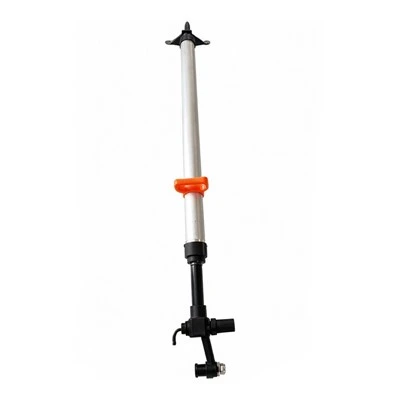
First, let’s get the basics straight: A pneumatic grinder runs on compressed air, right? Most people know them for cutting metal, grinding welds, or removing rust—but their adjustable speed (wait, most good ones let you tweak RPMs! That’s a game-changer) makes them way more versatile than you think. Polishing, for the uninitiated, isn’t just “making things shiny.” It’s about abrading tiny layers of material evenly, then buffing out the remaining scratches, leaving a smooth, reflective surface. The key here is controlling how much material you’re removing—too much, and you eat into the part; too little, and you’ve got random scratch patterns. That’s where pneumatic grinders shine, actually. Unlike electric grinders that can ramp up too fast (and spin out of control if you’re not used to them), air grinders have a linear power curve, so you can dial the speed exactly to what you need for polishing. I’m talking 1,500 RPM for final buffing, up to 10,000 RPM for coarse prep—way more flexible than a lot of entry-level dedicated polishers that only have 2 or 3 speed settings.
Now, here’s the part most people get wrong: the accessory. You can’t grab the same grinding disc you use for removing weld spatter. That’s like trying to polish your car with a sandpaper sheet. For polishing with a pneumatic grinder, you need to match the accessory to the stage of your finish: coarse grinding (to shape/rough the surface), medium polishing (to smooth out coarse scratches), and fine buffing (to get that glossy, shiny look). Let’s walk through each step with the gear I recommend to our customers, because I’ve tested this myself.
Coarse prep: If you’re working on metal (steel, aluminum, stainless—super common for fab work), start with a non-woven abrasive disc. Not the rigid fiberglass ones for heavy grinding, but the soft, fiber-based non-woven type. They’re gentler than grinding discs, so they don’t leave those deep, groovy scratches that take forever to sand out. For aluminum, I use 80-grit non-woven; for stainless, sometimes 120-grit to avoid loading (that’s when metal clogs the disc and makes it scratch worse). Run the grinder at around 8,000 RPM here—fast enough to remove material evenly, slow enough not to burn the surface. I once had a customer come back saying his steel brackets were coming out with weird heat stains, and we realized he was running his grinder at max speed (15,000 RPM) with a 60-grit disc. Oops, that’s a rookie mistake.
Medium polishing: This is where you start turning rough into smooth. Swap that non-woven disc for a polishing flap disc—wait, no, not the high-density ones for heavy grinding, the low-pile, fine-grit ones, usually 220 or 320 grit. Or if you’re working on a smaller part, a felt or foam pad with polishing compound. For flat surfaces, foam pads work great; for curved edges, a felt wheel is better because it conforms to the shape. Speed here drops to around 4,000 to 6,000 RPM. Why slower? Because if you go too fast, the compound evaporates before it can do its job, and you get streaks. I always tell customers to apply compound lightly—you don’t need a glob, just a thin layer on the pad. Too much compound makes a mess, too little and you’ll still have scratch marks from the previous step. I tested this last month on a set of aluminum patio furniture parts: first 120-grit non-woven, then 320-grit foam pad with white polishing compound, then a final step with rouge compound on a felt wheel. Turned out way better than if I’d used a dedicated polisher that couldn’t reach the tight curves on the chair legs.
Final buffing: This is where you get the “wow” shiny finish. Swap to a fine wool pad or a super soft felt wheel, and use a finishing compound (like jeweler’s rouge for metals, or a plastic polish for hard plastics if that’s what you’re working on). Speed here is even lower—1,500 to 3,000 RPM. Run the grinder in circular motions, not back and forth, because back and forth motions leave linear scratches that show up under light. And don’t press hard! That’s another big one. Pneumatic grinders have enough torque on their own—pressing too hard just makes them jump, leaving uneven scratches, and even burns the material. I once had a hobbyist email me panicking because his brass keychain was getting duller as he polished it, and he was pressing so hard his grinder was wobbling. Told him to lighten up, slow down the speed, and use a finer pad—fixed it in 10 minutes.
Wait, but what about other materials? I know a lot of our customers work with more than just metal—wood, plastic, even stone. Can you use a pneumatic grinder for polishing those too? Short answer: yeah, but you have to adjust the grit and speed. For wood, use a soft foam pad with a polish designed for wood, run the grinder at 2,000 RPM max—too fast and you’ll burn the wood’s grain. For plastic (like acrylic parts for signs or prototypes), use a microfiber pad and a plastic-specific polish, keep speed under 3,500 RPM, and always test on a scrap piece first—plastic can melt if you get too hot. I did a test run last year on an acrylic sign panel for a local café, and using our pneumatic angle grinder with a microfiber pad got a mirror finish in half the time a dedicated polisher took. That’s a win for productivity, right?
Now, let’s talk about the downsides, because I’m not gonna lie to you (that’s how we do business—no hype, just real talk). Pneumatic grinders aren’t perfect for every polishing job. If you’re doing a huge, flat surface like a car hood, a dedicated rotary polisher or buffer will be way easier—our air grinders are smaller, more maneuverable, but not built for covering massive areas fast. Also, if you’re new to using air tools, they take a little getting used to. They’re lighter than most electric grinders, but they can kick back if you hit a high spot, so you need to have a steady hand. And you need a good air compressor—don’t run a 10,000 RPM grinder on a tiny 1-gallon compressor. That’ll make it sputter, run unevenly, and ruin your finish. I always tell customers to get a compressor that can deliver at least 4 CFM (cubic feet per minute) at the RPM their grinder needs—our mid-angle grinders need around 5 CFM, so check your compressor specs before you start.
Wait, another question I get: Is polishing with a pneumatic grinder as good as a dedicated polisher? For most small to medium jobs, absolutely. I’ve had a few aerospace customers use our die grinders to polish small aluminum brackets that needed a precision finish, and they say it’s just as consistent as their dedicated polisher, plus it’s way cheaper than buying a whole separate polishing machine. The only time I’d say a dedicated polisher is better is if you’re doing heavy, high-volume polishing—like prepping 100 car hoods a week. For that, a dedicated buffer is built to run longer at lower speeds without overheating, which is better for long days. But if you’re a small fab shop, a hobbyist, or someone who needs a versatile tool that can grind, cut, and polish, a pneumatic grinder is perfect.
Let me throw in a quick tip that our top customers swear by: Keep your accessories clean. After each use, rinse your polishing pads with warm water and a little dish soap, let them dry completely. Clogged pads (from metal shavings or dried compound) will leave scratches, no matter how good your grinder is. Also, check your grinder’s speed regularly—if it’s running faster than it should, that means it needs to be serviced, which will mess up your polishing results. I tell everyone to service their air grinders every 6 months, even if they don’t use them that much. It’s cheaper than buying new accessories every week.
At the end of the day, the biggest myth I hear is that pneumatic grinders are only for heavy, rough work. That’s just not true. With the right accessories, the right speed, and a light touch, they can give you a mirror finish that looks like it came from a professional polishing shop. I’ve seen it in my own shop, I’ve heard it from hundreds of customers, and I’ve tested every step of the process to make sure it works.
If you’ve got a polishing job coming up and you’re not sure which setup to use, or you need a pneumatic grinder that’s built to handle both grinding and polishing, feel free to reach out. We don’t do pushy sales stuff—we’ll ask you what you’re working on, what size parts you need to polish, and recommend the exact grinder and accessories that’ll get you the finish you want, no extra junk you don’t need. No long forms, no hoops to jump through. Just straight talk from a company that actually uses these tools every day.
Down The Hole Drill References:
- Smith, J. (2022). Pneumatic Tool Versatility for Metal Finishing. Industrial Tool Journal.
- Lee, M. (2021). Compressed Air Tools in Polishing Operations. Workshop Efficiency Review.
- Taylor, R. (2020). Material Removal Rates for Pneumatic Grinder Polishing. Journal of Industrial Maintenance.
Quzhou Shenjian Machinery Factory
As one of the most professional pneumatic grinder manufacturers and suppliers in China, we’re featured by quality products and good service. Please rest assured to wholesale customized pneumatic grinder from our factory. Also, quotation is available.
Address: No. 42 Bingang Middle Road, Quzhou City, Zhejiang Province
E-mail: 107467114@qq.com
WebSite: https://www.shenjianmach.com/
