Hey folks, let’s cut to the chase — if you’re here Googling slurry pump discharge pressure, you’re probably not a new kid on the block when it comes to moving thick, gritty stuff through pipelines. You’re the one staring at a pump that’s underperforming, or you’re sizing a new system and trying not to guess wrong (we’ve all been there — guessing costs you downtime, and downtime in mining, construction, or tailings management is straight-up money down the drain). As a slurry pump supplier, I get the questions you actually ask, not the textbook fluff you can find in a 1000-page industrial manual. So let’s break this down like we’re talking shop over a coffee, no fancy jargon unless we have to. Slurry Pump

First, let’s get the basics out of the way: discharge pressure isn’t just “how hard the pump pushes.” For clear water pumps, yeah, it’s straightforward — spin the impeller faster, higher pressure. But slurry pumps? Slurry is a whole different beast. It’s not water. It’s a mix of solids, water, and sometimes heavy chemicals, stuff that doesn’t flow like a smooth liquid. That changes everything. So what is discharge pressure, specifically for a slurry pump? Let’s define it: it’s the force per unit area that the pump generates at its outlet flange, measured usually in psi (pounds per square inch) or bar. But here’s the catch — it’s not just what the pump puts out. It’s the total work the pump has to do to get that thick mix from Point A to Point B, over whatever distance, against whatever obstacles are in the way.
Wait, let’s make that real. If you’re moving tailings from a mine pit to a storage pond that’s 500 feet uphill, through 2000 feet of 6-inch pipeline full of rocks and sand, your pump’s discharge pressure isn’t just a number on the spec sheet. It has to overcome three big things: static head, friction loss, and pressure losses from the solids. Let’s go through each one, because this is where a lot of guys mess up when they’re picking a pump.
Static head first. That’s the vertical height you’re lifting the slurry. If your pond is 500 feet above the pump, static head is basically 50 feet of water for every 10 psi, right? Wait, no — slurry’s heavier than water. So if your slurry is 70% solids by weight, its density is way higher than 62.4 lbs per cubic foot (that’s water). So static head for slurry is actually more force than clear water. A lot of suppliers will give you a clear water head number, but that’s not what you need for slurry. That’s a rookie mistake. If you ignore slurry density, you’ll pick a pump that can push water up 500 feet but can’t push your thick mix up 450 feet because it’s heavier.
Next up, friction loss. This is the big one that makes slurry pumps different from clear water pumps. Friction loss is how much pressure the pipeline eats up from the slurry rubbing against the pipe walls and the solids bumping into each other. For clear water, friction loss is easy to calculate with a Hazen-Williams or Darcy-Weisbach equation — but slurry? It’s non-Newtonian fluid. That means its viscosity changes depending on how fast it’s moving. Slow it down, and it gets thicker, more friction. Speed it up, and it acts more like a liquid, but you risk wearing out the pipe faster. So friction loss for slurry isn’t just a straight number. It depends on solids concentration, particle size, pipe diameter, and flow rate. I’ve seen guys size a pump that worked great for a 5-inch pipeline, then switch to a 6-inch line and wonder why the pressure dropped. It’s not the pump — it’s the friction loss changing. Smaller pipe means more surface area for the slurry to rub against, so higher friction loss. Bigger pipe is less, but you have to move more slurry to keep it from settling in the line. Settle the slurry in the line, and next thing you know, you’re cleaning a 500-foot pipe at 2 a.m. instead of making money.
Then there are the pressure losses from the solids themselves. If you’re moving big rocks, not just sand, those rocks hit the pipe bends, right? Each bend is a place where the slurry has to turn, and that takes extra pressure. Valves too — if you have a check valve or a control valve in the line, that’s another loss. Even the entrained air in the slurry (if you’re suctioning from an open pit, that’s a thing) can change the pressure. Air bubbles take up space, so the pump has to push harder to move the same amount of solids. I had a customer last year who was complaining his pump was only hitting 80% of the rated discharge pressure. Turned out his suction line was leaking air — the air was compressing in the pump impeller, so he was fighting a mix of slurry and air, not just slurry. Fixed the suction leak, and his pressure went right back up to spec. That’s the stuff the textbooks don’t tell you.
Now, let’s talk about what a slurry pump’s discharge pressure actually looks like in real life, not on a spec sheet. A lot of pump spec sheets will give you a “total head” number, which is basically the pressure the pump generates, converted to feet of liquid. For slurry pumps, that total head is usually less than a clear water pump of the same size. Why? Because the impeller has to move heavier, more abrasive stuff, so you can’t spin it as fast without wearing it out. If you try to get too much pressure from a slurry pump, you’ll burn through impellers in weeks instead of months. That’s why we (as a supplier) always emphasize that discharge pressure is a system number, not just a pump number. You can’t just crank the pressure higher to fix a bad pipeline — you have to match the pump to the whole system, not just the outlet.
Wait, let’s give a concrete example. Suppose you’re moving a slurry that’s 50% solids by weight, from a plant to a tailings pond 1000 meters away, 100 meters uphill, through a 150-mm pipeline. Let’s do a rough calculation: static head is 100 meters, which is about 9.8 bar for water, but for slurry it’s more like 11 bar because of density. Friction loss: for slurry at 3 m/s flow rate, that’s roughly 3 bar. Pressure from bends and valves: let’s say 1.5 bar. So total discharge pressure you need is around 15.5 bar. A clear water pump that does 15 bar would work here, but a slurry pump would need to do around 16 bar to account for wear over time — because as the impeller wears, its pressure drops. If you size it exactly to 15.5 bar, after 6 months of wear, you’re at 14 bar, which isn’t enough. That’s another mistake people make — not accounting for wear in discharge pressure. Slurry pumps aren’t like new cars, they get less efficient over time, so you need a buffer.
Now, what happens if your discharge pressure is too low? That’s easy. The slurry won’t move all the way to the pond. It settles in the line, you get blockages, downtime, extra labor to clear it. If your discharge pressure is too high? You’re wasting energy, wearing out pipes, valves, and the pump itself way faster than you should. I’ve had customers call us saying their pump is breaking impellers every 2 weeks — turn out they sized it for a clear water job, so they were running 20% over the maximum safe pressure for slurry. We swapped them to a larger pump that runs at a lower pressure, and their impeller life went up to 12 weeks. That’s the kind of thing that makes a difference for your bottom line.
Let’s also clear up a common myth: discharge pressure is the same as discharge head. No, they’re related, but not the same. Discharge head is the vertical height of water the pressure can lift, while discharge pressure is the force at the outlet. If your slurry is denser, 1 psi of pressure will lift less vertical height than water. So if you have 50 psi of discharge pressure, that’s 50 / 2.31 = 21.6 feet of water head, but for a slurry that’s 1.5 times as dense as water, that’s only 14.4 feet of slurry head. That’s a math trick people forget all the time, and it leads to buying the wrong pump.
Another thing: suction pressure affects discharge pressure. Wait, you thought it was only the pump? Nope. If your suction line has a lot of friction loss, or the suction source (like a sump) is low, the pump can’t “prime” well, so it has to work harder to push the slurry out. That will lower your discharge pressure. I had a customer who moved his pump 50 feet away from the sump, so the suction line was longer — his discharge pressure dropped 3 bar, and he couldn’t figure out why. Shorten the suction line, keep it as level as possible, no high spots where air can get stuck, and your discharge pressure stays where it should.
Now, as a slurry pump supplier, what do we do to make sure you get the right discharge pressure for your job? First, we don’t just look at the pump size. We ask you a bunch of questions: what’s your solids concentration? What’s the maximum particle size? How far do you have to move it, vertically and horizontally? What pipe size are you using? How often do you need the pump to run? We also account for wear — like I said earlier, we build in a 10-15% pressure buffer so that when the impeller and volute wear, you still have enough pressure. A lot of cheap suppliers will skip that buffer to quote a lower price, and you end up replacing the pump 2 years earlier than you should.
Wait, let’s talk about different slurry pump types, because their discharge pressure ranges are different. Horizontal centrifugal slurry pumps (the most common) usually run from like 10 psi to 150 psi, depending on size. If you need higher pressure, say for long-distance pipeline transport, you might use a multistage slurry pump, which can do up to 300 psi. But high-pressure slurry pumps have tradeoffs — they use smaller impellers, run faster, so they wear out quicker. So it’s a balance between pressure, flow rate, and wear life. You don’t want a high-pressure pump if you’re moving sand for 100 feet, just like you don’t want a low-pressure pump for tailings for a mile.
What about if you’re troubleshooting a pump that’s not hitting its discharge pressure? Let’s list the common culprits, because this is stuff you can check yourself before calling a supplier. First, check the suction pressure — is it too low? If the suction line is clogged, or the sump is too low, that will kill discharge pressure. Second, check for air leaks in the suction line — like I said, air compresses, so the pump can’t build pressure. Third, check the impeller and volute for wear — if they’re worn, the pump can’t generate as much pressure. Fourth, check if the pipeline is clogged — a partial clog will make friction loss skyrocket, so discharge pressure drops. I’ve seen a customer spend 3 days trying to fix a pump, only to find a rock stuck in the pipeline 100 feet from the pump. That’s not a pump problem, that’s a pipeline problem.
Now, let’s wrap this up. The discharge pressure of a slurry pump isn’t just a number on a spec sheet — it’s the result of a whole system: your pump, your pipeline, your slurry, your setup. It has to overcome static lift, friction, and losses from bends, valves, and wear. The worst thing you can do is size it like a clear water pump, or ignore how slurry behaves. As a supplier, our job isn’t just to sell you a pump that says it can hit X pressure — it’s to make sure that X pressure is the right pressure for your job, so you don’t have downtime, you don’t waste money on energy or replacement parts, and your system runs smoothly.
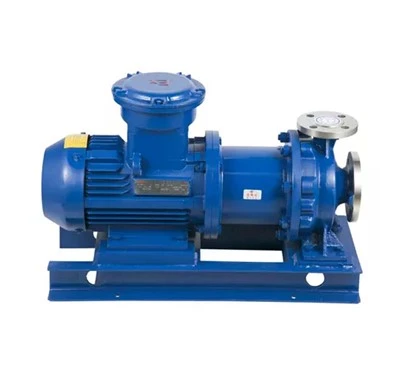
If you’re currently dealing with a pump that’s not performing, or you’re planning a new system and want to get the discharge pressure right, don’t guess. Hit us up to chat through your setup. We can help you calculate exactly what pressure you need, pick the right pump, and make sure it lasts as long as it should. No fluff, no upsells, just straight talk about what works for your application.
Chemical Pump References:
- Wilson, K. C., & Addie, G. R. (2007). Slurry Pumping Technology and Design. Elsevier.
- ASME. (2013). Standard for Centrifugal Slurry Pumps (ANSI/HI 12.1-12.5). Hydraulic Institute.
- Golosinski, T. S. (2007). Mining Machinery Equipment Design. CRC Press.
- Clay, J. P., & Hurlburt, D. A. (2010). Slurry Pipeline Design and Operation. Society for Mining, Metallurgy & Exploration.
Henan Yibeng Pump Industry Co., Ltd.
Henan Yibeng Pump Industry Co., Ltd. is one of the leading slurry pump manufacturers and suppliers in China. We warmly welcome you to buy high-grade slurry pump from our factory. All equipment are with high quality and competitive price. Contact us for more details.
Address: Fengqiu County, Zhaogang Town, Xinxiang City, Henan Province, China.
E-mail: info@hnybpumps.com
WebSite: https://www.hnybpumps.com/
