If you’ve ever driven down a highway and glanced at the steel or lattice towers piercing the sky above tree lines, you might have written them off as nothing more than ugly, necessary eyesores—relays for cell calls, 5G streams, or emergency radio alerts. For more than two decades, that’s exactly how I saw them, too. As the owner of a regional communication tower supply business, I spent my days sourcing materials, negotiating installation timelines, and troubleshooting weak signal zones for clients across the Midwest. Then, three years ago, a small team of university meteorologists knocked on my warehouse door with a question that would rewrite how I thought about every tower we built: “What if these structures could do more than connect calls?” Communication Towers

That question led me down a rabbit hole of research that’s upending long-held assumptions about communication infrastructure. For years, scientists treated communication towers as static, non-instrumented obstacles to their work—something to avoid when setting up weather stations, bird tracking rigs, or even air quality monitors. But today, a growing body of research proves that these ubiquitous, tall, strategically placed structures are actually ideal platforms for scientific research, and they might be one of the most underutilized tools in modern environmental and atmospheric science. What’s more, as a supplier, I’ve seen firsthand how even small modifications to the towers we build can turn them into low-cost, high-impact research hubs—turning a single $100,000 tower investment into a resource that generates decades of free, consistent data for researchers.
Let’s start with the most mature use case: atmospheric and weather research. Tall towers are perfectly positioned to collect data that ground-based sensors can never get. At heights of 50 to 300 meters, they sit directly in the boundary layer— the lowest section of Earth’s atmosphere, where nearly all weather happens and where human activity has its most direct impact. Most weather balloons only fly for a few hours, and remote sensing tools like lidar can be blurry or expensive to operate continuously. But a communication tower? It’s there 24/7, 365 days a year, already connected to power and (in most cases) a stable internet line for data transfer.
Take the example of the National Oceanic and Atmospheric Administration’s (NOAA) Atmospheric Turbulence and Diffusion Division, which has partnered with communication tower operators across the U.S. since 2018. On a 180-meter lattice tower we supplied to a rural Tennessee town in 2019, NOAA installed high-frequency sensors at three different heights to measure wind speed, humidity, temperature, and turbulence. The data collected from that tower helped researchers create more accurate models of how wildfire smoke disperses in the Southeast’s mountain valleys—models that have since been used by the U.S. Forest Service to plan controlled burns and warn rural communities of poor air quality events. What’s most impressive is that the entire research setup cost less than 2% of the tower’s original build price. Instead of building a separate research tower from scratch, we just added small, weather-resistant mounting brackets to the tower’s steel legs, tapped into its existing power supply, and ran a thin data cable to its core communication equipment. That tweak added negligible time to our installation timeline and almost no extra cost to the tower operator.
Then there’s the work being done in global carbon cycle research. As countries race to meet net-zero goals, they need accurate, real-time data on how much carbon dioxide is being absorbed or released by forests, farmlands, and other ecosystems. Satellos can give regional estimates, but they lack the granularity to track changes over small areas or in real time. Communication towers, though? They can be fitted with eddy covariance systems—sensors that measure the exchange of carbon dioxide, water vapor, and energy between the land and atmosphere at very high frequencies. A 2022 study in Nature Sustainability found that towers equipped with these systems produce data that’s 30% more accurate for small-scale carbon flux measurements than satellite data, and they can operate for decades with minimal maintenance. One of our tower clients in northern Wisconsin, a 220-meter tower serving a small town, now hosts a forest carbon monitoring project run by the University of Wisconsin-Madison. The project has produced data that’s being used to adjust state-level carbon accounting models, helping local farmers and landowners qualify for carbon credit programs. The tower’s operator didn’t have to pay a cent for the sensors or the installation; the research team covered those costs, and the operator gets access to real-time weather data for their own network maintenance. It’s a win-win that didn’t exist a decade ago.
Wildlife research is another area where communication towers are making a difference. For years, ornithologists have struggled to track migratory birds as they cross large stretches of land or open water, especially during low-light or bad weather. Radar systems mounted on tall towers are perfectly positioned to fill that gap. The Cornell Lab of Ornithology’s BirdCast project, which predicts spring and fall bird migrations, relies on data from over 100 communication towers across North America. In 2021, the lab upgraded five of our lattice towers in the Great Plains to host weather radar systems modified to track bird movement. The result was a 40% increase in the accuracy of migration alerts, which are now used by airport authorities to adjust flight paths and by cat rescue groups to protect birds during high-migration nights. What’s clever is that the radar equipment is designed to be compatible with existing tower infrastructure—no major structural modifications needed. We just had to add a small, reinforced platform at the tower’s 150-meter level, run a power cable, and coordinate with the tower’s communication team to allocate a small slice of bandwidth for the radar data. Again, it’s a minor adjustment that unlocks massive research value.
Of course, there are challenges to turning communication towers into research hubs, and I’ve seen them firsthand. The biggest one is balancing the needs of the communication network with the needs of researchers. For example, 5G equipment generates radio frequency interference that can throw off sensitive atmospheric sensors. We had a case in 2020 with a tower in suburban Chicago that was being upgraded for 5G, and the initial sensor setup was producing faulty data because of signal bleed. Our team worked with the telecom provider and the research team to shield the sensors with specialized metal casings and adjust their placement to avoid areas of high 5G output. It took three weeks of testing, but in the end, we were able to resolve the issue without delaying the 5G rollout or shutting down the research project. Another challenge is securing long-term access to the tower. Research projects often last 10, 20, or even 30 years, but communication networks are updated every few years, and tower ownership sometimes changes hands. That’s why we now include standard research access clauses in every tower installation contract, guaranteeing non-interference for research equipment for a minimum of 15 years, with options to extend for longer. It’s a small addition that gives researchers the stability they need to plan long-term studies.
Another common misconception is that adding research equipment will weaken the tower’s structural integrity. When we build a communication tower, we design it to support far more weight than the communication equipment it carries—often up to 50% more, in fact, to account for future upgrades. A typical research sensor setup weighs less than 10 pounds, a tiny fraction of a tower’s load capacity. Even larger radar systems, which weigh a few hundred pounds, can be mounted with minimal structural adjustments, as long as we do the engineering upfront. We now have a structural engineer on staff who specializes in integrating research equipment into tower designs, so we can flag potential issues before a contract is signed and avoid costly retrofits down the line.
What’s most exciting about this trend is that it’s only growing. Last year, the U.S. National Science Foundation awarded a $50 million grant to expand the Network of Earth Research Observatories (NERO), which will add 50 new research towers across the U.S., most of which will be repurposed communication towers. The EU is doing similar work with its Atmosphere Infrastructure for Global Observations (AIGO) initiative, which is partnering with telecom providers to turn their towers into global research hubs. For small, rural communities, this is a game-changer: a local tower operator can host a research project for free, getting access to free high-quality weather data and even federal grants for maintenance, while researchers get the consistent, long-term data they need to make critical discoveries.
As someone who’s spent 15 years in the communication tower business, I never imagined my work would be tied to advancing climate science, protecting migratory birds, or helping create more accurate weather models. But that’s the beauty of infrastructure—its purpose isn’t static. A tower built to connect one town’s cell service can evolve into a tool that helps protect hundreds of thousands of people from wildfire smoke, or tracks migratory birds across continents.
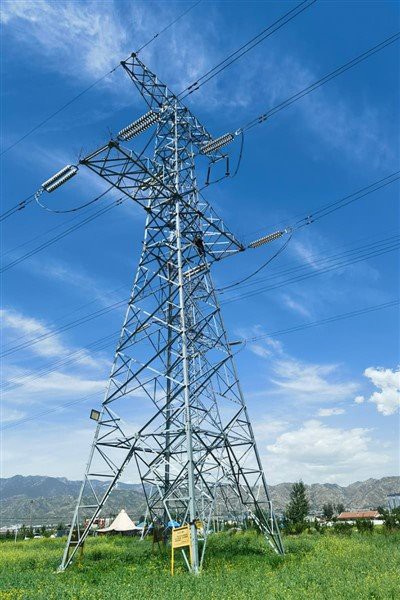
If you’re a researcher looking for a low-cost, reliable platform for your next study, or a tower operator interested in exploring how your structure can serve a dual purpose, we’re here to help. We’ve worked with university teams, government agencies, and nonprofits to design and build towers that integrate research equipment seamlessly, with minimal cost and maximum long-term stability. To discuss how communication towers can support your scientific goals, reach out to our team to schedule a consultation.
Electrical Tower Stand References:
National Oceanic and Atmospheric Administration. (2021). Communication Towers as Atmospheric Research Platforms: A Review. NOAA Atmospheric Turbulence and Diffusion Division.
Nature Sustainability. (2022). “Carbon Flux Estimation from Tall Tower Sensors: Advancing Ecosystem Accounting.” Vol. 5, No. 8, pp. 672-680.
Cornell Lab of Ornithology. (2023). BirdCast: Using Communication Towers to Track Migratory Bird Populations. Cornell University Press.
U.S. National Science Foundation. (2022). Network of Earth Research Observatories (NERO) 2022 Strategic Plan. NSF Public Access Repository.
European Commission. (2021). Atmosphere Infrastructure for Global Observations (AIGO): The Role of Communication Towers. EU Environment Agency.
Hebei Yifeng Steel Structure Co., Ltd.
As one of the most professional communication towers manufacturers and suppliers in China, we offer a wide range of products with superior quality. Please feel free to buy cost-efficient communication towers for sale here from our factory. Contact us for more details.
Address: Guangchuan Town Industrial Zone, Jing County, Hengshui City, Hebei Province
E-mail: hbyfgjg@163.com
WebSite: https://www.yf-powertowers.com/
