Let me tell you something no one warns you about when you’re deep in the thick of making a Horizontal Machining Center (HMC) frame—this isn’t just metal bending or welding together. I’ve been running my small frame shop for 12 years, and every year, we take on more custom builds and hit way more snags than I ever thought possible back when I was just a guy in a workshop trying to perfect a single frame for a local job shop. Most people see an HMC as the flashy cutting head or the CNC controls, but the frame is the backbone of the whole machine—if it’s wobbly, nothing else works, no matter how fancy the programming. Horizontal Machining Center Frame
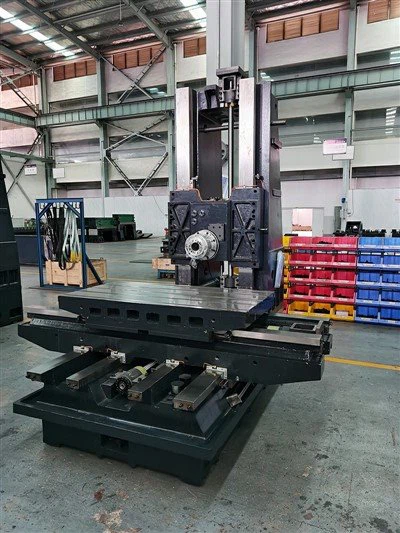
First off, there’s the material madness. Everyone goes for cast iron, right? It’s supposed to be super stable, dampens vibration way better than steel, and holds tolerances like a champ. But cast iron’s a diva. You can’t just order a 10,000-pound casting and assume it’s good to go. I’ve had three shipments go south in the last two years alone—one had hidden voids in the core that showed up only after we started machining the bolt holes, another had a warped base that was off by .003 inches over 6 feet, which is impossible to fix without reworking the whole thing, and a third had a grain structure that was too uneven, leading to chatter during the finish cut. Wait, and don’t even get me started on gray iron vs. ductile iron. Gray is cheaper, but it’s way more brittle—you tap it wrong when welding on a reinforcement plate, and it cracks. Ductile is stronger, but it’s harder to machine, so you end up burning through tooling 20% faster. Some customers beg for steel frames because they’re lighter and cheaper upfront, but steel flexes like a soda can if you don’t use enough cross-bracing. I had a guy last year who built his own prototype frame out of mild steel and ended up with 0.005 inches of deflection under load—enough to throw his machining tolerances way off.
Next up, the geometry that makes or breaks everything. HMC frames are not simple boxes—they have those precision rail ways for the spindle carriage, the rotary table mounting pads, the coolant lines running inside, and all the bolt holes that have to line up with the machine’s subassemblies. The problem here is that every part of the frame has to hold a tolerance of .002 inches or better over an area that’s often 10+ feet long. That’s way tighter than most standard industrial parts. I remember a 2022 order for a 5-axis HMC frame—we had to machine 12 mounting pads for the rotary table, and all their angles had to be within .001 degrees. We got halfway through machining and realized one pad was milled 0.004 inches off because the casting shifted just a tiny bit in our 5-axis mill’s vice. Tried to fix it, but any extra material removed there would have weakened the pad, so we had to scrap the whole frame. That cost us almost $18k in material and labor, and pushed the customer’s delivery back two weeks. Another thing: when you weld on reinforcement plates or add internal gussets, that introduces heat distortion, right? Even if you tack them perfectly, the heat from MIG or TIG welding will warp the frame. I used to just weld straight through, but now we do intermittent passes and chill the areas with wet rags, but even that only cuts distortion by about 60%. We still have to do a stress relieving bake after all welding, but if you bake too hot, the cast iron’s grain gets soft; too cool, and residual stress stays in, leading to movement when the machine is run at full power.
Wait, and then there’s the mass distribution thing that no one talks about until it’s too late. HMCs are heavy—like, 20,000 to 50,000 pounds for medium-sized models. The frame has to carry all that weight, plus the cutting forces that can hit 10,000 pounds of pressure when machining thick steel blocks. If you balance the mass wrong, the frame will vibrate like a tuning fork when the spindle spins at 10,000 RPM, or when the rotary table indexes. Last year, we delivered a frame to a customer in Detroit, and they installed it, but when they ran a test cut, the spindle started chattering so bad it ruined a $2,000 carbide end mill. Turned out, we’d placed the main cross-beam too far forward, so the center of gravity was off by just 0.5 inches. No big deal, right? Wrong—moving the cross-beam meant re-machining half the frame, adding more gussets to fix the balance, and losing another week of production. We ate the cost, obviously, because that’s what you do when you mess up, but it still stung. Also, for HMCs, you have to account for both the static weight of the machine and the dynamic forces from the moving parts—the X, Y, Z axes, the rotary table swinging back and forth. A frame that’s fine for a vertical mill will fall apart because it can’t handle those shifting dynamic loads.
Then there’s the machining process itself, which is where most of the hidden issues pop up. A lot of people think, “It’s just a big chunk of metal, run the mill and go.” But no—when you’re machining a frame that’s 12 feet long and 6 feet tall, even a tiny vibration in the mill or a slight tool deflection will throw the tolerances way off. I use 5-axis CNC mills now, but even those can drift if the machine’s own bed isn’t level. Wait, we level our mills every morning with a laser level, right? But the workshop floor shifts, especially when we move heavy parts or run other big machines. I learned that the hard way: we ran a frame last winter, the floor was a bit frozen under the workshop slab, so when we leveled the mill, it seemed fine, but by the time we finished machining the bottom pad, the mill had drifted 0.003 inches because the slab warmed up and shifted. That frame went to the customer, and they noticed the bolt holes didn’t line up with the base—had to add custom shims, which made them unhappy, and cost us a service call. Another thing: tool selection. For cast iron, you need carbide tools with specific coatings to avoid heat buildup, but if you use a tool that’s too small or not sharp enough, you get built-up edge, which scratches the machined surfaces and throws off the flatness. We used to switch tools every 8 hours, but now we do it every 4, which cuts down on errors but adds to material costs. Also, when you machine the mounting pads, you can’t just take a light pass—you have to remove enough material to get to the true surface, but if you remove too much, you weaken the pad’s integrity. It’s a fine line, and one that takes years to get right.
Oh, and let’s not forget about quality control (QC) for these big parts. How do you measure a 14-foot frame’s flatness? A standard CMM can’t reach that. We invested in a laser tracker a few years back, which is like a high-powered laser that bounces off a target on the frame and measures distances down to the micron. But even the laser tracker has issues—dust in the workshop scatters the laser, so we have to close all the vents and run dust collectors during measurement. Also, when you have a frame that has 50+ bolt holes, all needing to be within .002 inches of their specified location, checking each one manually would take days. We use a CNC probing system on our mill that checks every hole and pad automatically, but that’s an extra step that adds time, and if the probe is calibrated wrong, you get bad data. We had a scare last quarter when the probe was off by .0015 inches—we checked 10 random holes and they were perfect, but 2 of the 50 were off. Caught it before delivery, but that was a close call.
Wait, and one more thing: customer-specific customizations. No two HMC frames are the same. Some customers want extra mounting points for coolant pumps or chip conveyors, some need the frame to fit in a specific space in their factory, some run at higher spindle speeds so they need extra bracing. The worst part is when a customer makes a last-minute change after we’ve already started machining. Last year, a customer in Ohio called us at 2 a.m. (they were on night shift) and said they needed to add a slot for a chip conveyor that we hadn’t accounted for. We had to stop the mill, redesign the frame, rework the CNC program, and by the time we were done, we’d used 20 extra pounds of cast iron and lost 3 days of production. We didn’t charge them extra, but it set us back on three other orders because we had to rearrange our schedule.
I know a lot of people in the industry will say, “Just use premium castings, follow the standard machining processes, and you’ll be fine.” But that’s not how it works. HMC frames are a balance between material science, precision geometry, heat control, mass distribution, and skilled craftsmanship. It’s not like making a car part where you can mass-produce 1000 identical units; most of the frames we make are custom, one-offs, for small job shops or big aerospace companies that need super precise machining. I’ve had frames that took us 8 weeks from order to delivery, with 2 weeks of that just for QC and reworks. The worst part is that even after you ship it, there’s a chance something will go wrong during installation or operation, because no amount of testing in the workshop can replicate the exact conditions of a customer’s factory—like their floor, their power supply, how they mount the machine.
If you’re out there shopping for an HMC frame, don’t just look at the price. Ask questions: what material grade do you use, what’s your stress relieving process, what’s your tolerance for mounting pads, do you have laser tracking to check big parts? Because a cheap frame might save you money upfront, but if it’s wobbly or has bad tolerances, you’ll end up paying for reworks, lost production time, and bad parts machined on a subpar frame. For us, it’s not just about selling a frame—it’s about making sure that frame works for our customer, because if their HMC is running smooth and accurate, that’s good for everyone. I’ve turned down orders before when I knew we couldn’t deliver a frame that met the customer’s specs, because I’d rather lose a sale than have a customer come back upset.
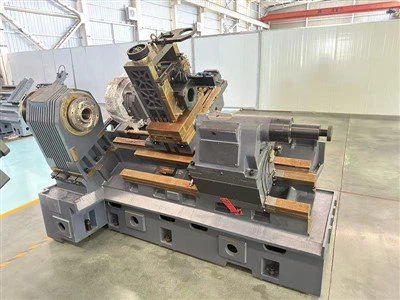
At the end of the day, making an HMC frame is equal parts science and stubbornness. You have to know the metallurgy, the machining tolerances, the physics of vibration, but you also have to be willing to test, rework, and adjust when something goes wrong. That’s why I’ve been doing this for 12 years, and that’s why we’re still here. If you’re in the market for a Horizontal Machining Center frame and need someone who knows the ins and outs of this tricky process, hit us up to talk through your project. We don’t do one-size-fits-all, and we stand behind every frame we build.
Double Column Machining Center Frame References
- ASME B5.54, Methods for Performance Evaluation of Numerical Control Machining Centers
- Kalpakjian, S., & Schmid, S. R. (2022). Manufacturing Processes for Engineering Materials (8th ed.). Pearson
- HMC Frame Design and Manufacturing Best Practices (2023). Machinery Fabrication Association Technical Report
- Vibration Damping in Machine Tool Structures (2021). International Journal of Machine Tools and Manufacture
Smartech Machinery & Equipment Co., Ltd.
As one of the most professional horizontal machining center frame manufacturers and suppliers in China, we also support customized service. Please rest assured to buy bulk horizontal machining center frame made in China here from our factory. Contact us for more details.
Address: Room 2832, Changping Commercial Mansion, Shihua Road, Futian Free Trade Zone, Shenzhen, China
E-mail: smartech@smartechcnc.cn
WebSite: https://www.smartech-cnc.com/
